Thursday, May 11, 2006

Off the road

We were traveling in a car and could have been self-sufficient.
We had a mattress in the back, suitable for sleeping (after the cargo
had been redistributed to the front seats and the back seats folded
down). We had a camp stove and food. We had enough water. If we
wanted to expend some extra energy, we had a tent.
There was no real need to pay for a place to stay. And yet, we did.
Most of the nights we didn't stay with friends we paid for a camp
spot at a hostel or in a "Holiday Park" - private campgrounds with
facilities.
There were the showers, and hot water, a nice luxury when you're on
the road. There were the full kitchens.
But the real problem with just pulling over and staying in the car
was the end of daylight savings.
The weather was fine for our vacation. Sun most days, often warm
enough to make just hanging out on the beach a viable option. We were
in the presence of bikinis even on the last few days of our North
Island trip.
However, fall is definitely here and the sun has decided it doesn't
have to work a full shift any more. Even the nice days end around
5:30 p.m. That's a little early to just call it a night.
So we paid for the lights. Electricity, which meant a few hours
reading (or even some TV, at the larger grounds).
Yet another reason the summer is the ideal time for a road trip.

One of the most important things to know about New Zealand is this: you can't sue.
It's not quite as cut-and-dried as that, but it is true the country essentially outlawed personal injury lawsuits. Instead, the government pays all medical bills in the case of any accident.
This is important, especially for the tourists. Not because I care one way or the other about my ability to file a lawsuit. Because it means operators can offer crazy experiences without having to worry about crazy insurance premiums or lawsuits.
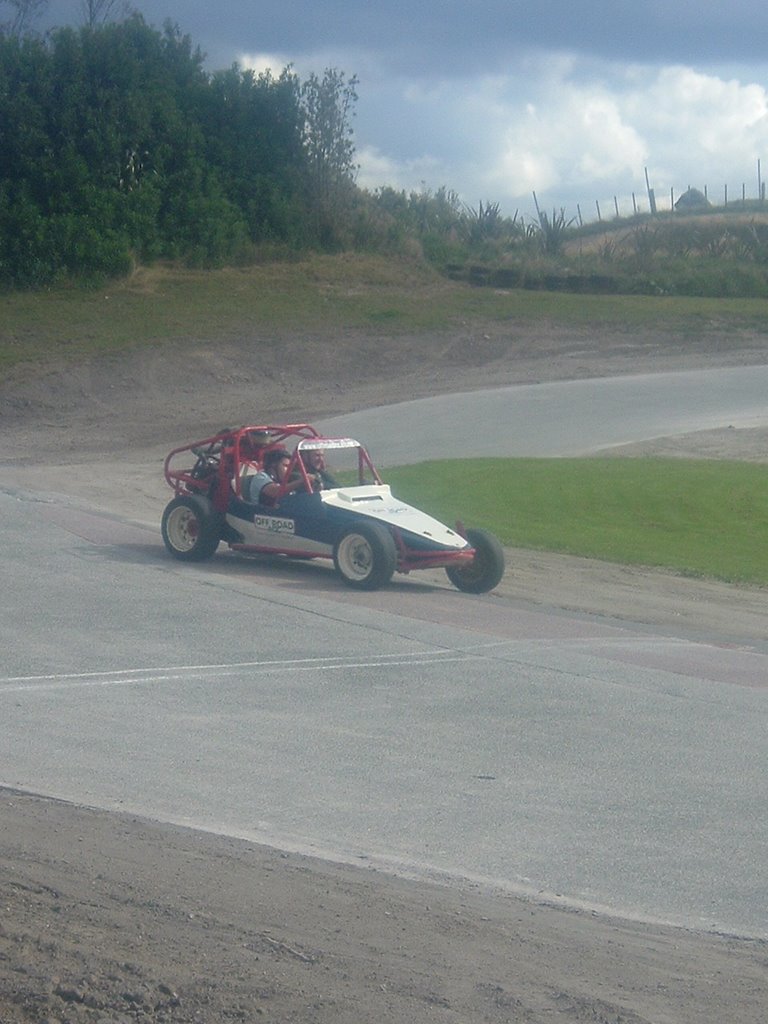
Case in point: over three days in Rotorua, I rolled down a large hill inside a plastic ball filled with water; drove a sprint car around a tiny concrete track, and rode down a white-water river with only a piece of hard plastic the size of a boogie board for protection and flotation.

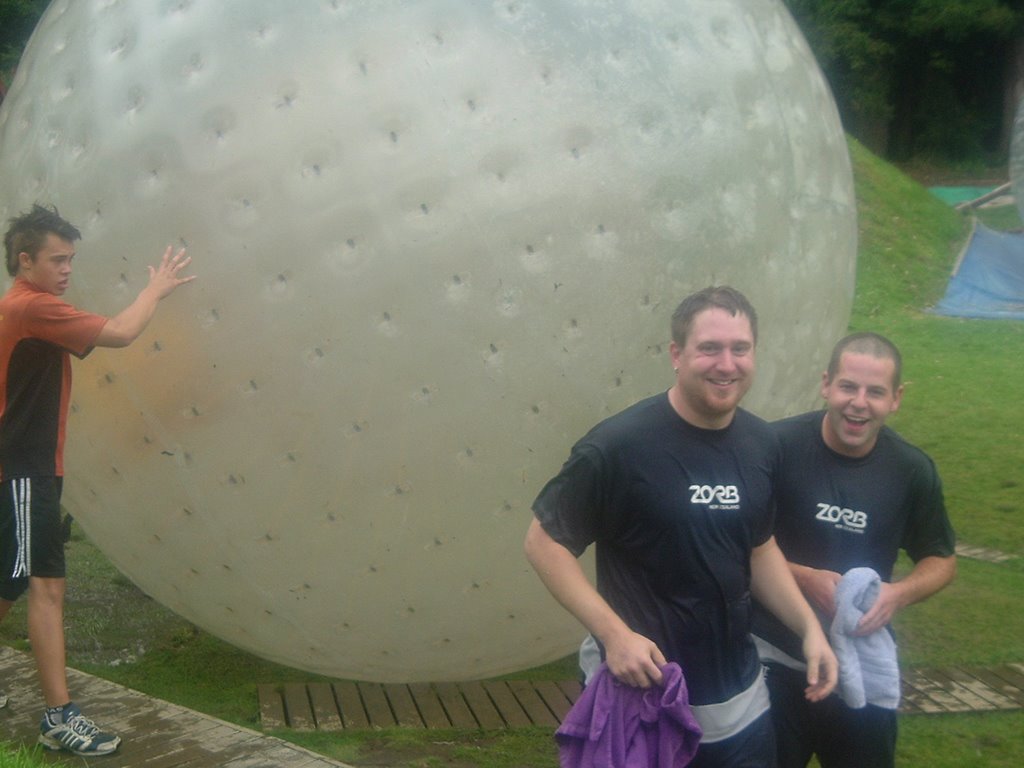
Zorbing - rolling down the hill in a rubber ball - is a surreal experience. My ball was clouded milky white, so I couldn't see what was happening. I wasn't the only one in the ball, either - my friend Paul was also enclosed, as well as a few gallons of warm water. Once the ball started rolling, we just ended up sprawling on the floor, watching the sides zip around as the ball rolled down the hill.
Sledging - whitewater rafting without a raft - is a tiring experience. Actually going through the whitewater and rapids is the easiest bit. The tiring part is trying to kick against the current to get to the side of the river or steer along.
Driving the sprint car - a souped-up roll cage on tires - was also tiring, mostly due to the lack of power steering. It was also slightly disappointing, since my best lap time was 12.98 seconds, behind the 12.6 seconds Paul managed and well behind the 11.05 course record (it was on the upper end of the day's best runs though, and at least I cracked 13). More fun was having the power to drift around the corners, hearing the tires squeal. It might not lead to the best time, but it is more fun.

Since arriving in New Zealand I've swam with dolphins, jumped out of a plane, tubed down a stream inside a glow-worm cave, zorbed, sledged, driven a sprint car, kayaked in a fiord during a downpour, kayaked in the Bay of Islands during a perfect day of sunshine, skied on a volcano, sledded down sand dunes.
Next up on the list: a bungy jump.

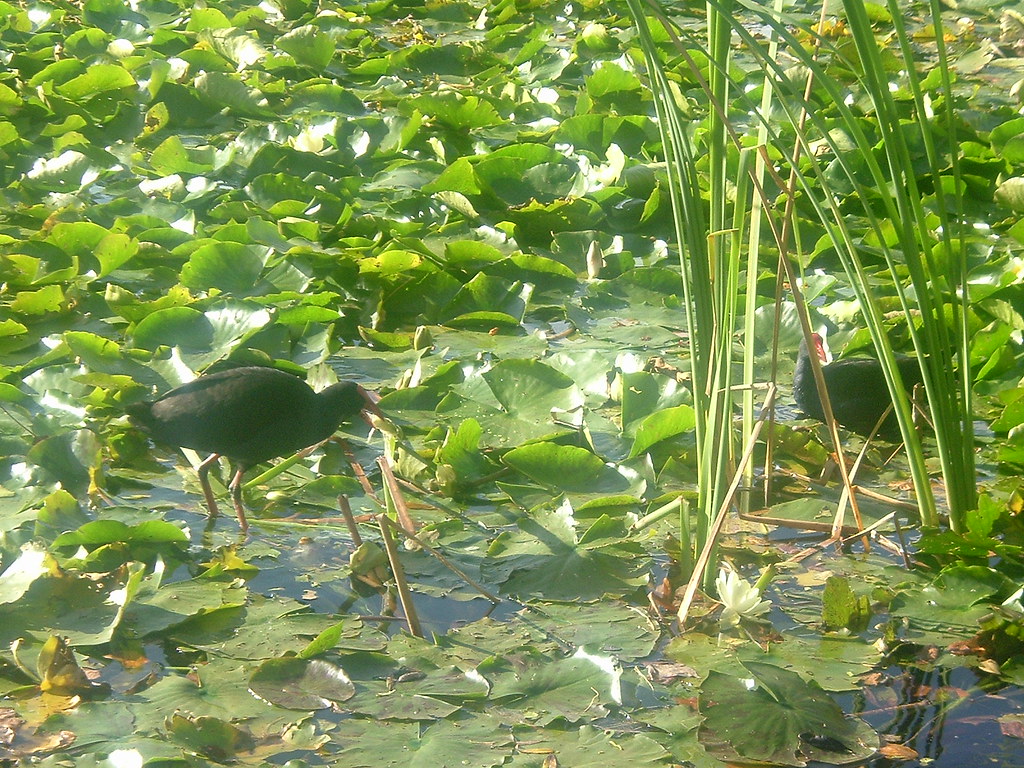
Pukeko


stepping out
Originally uploaded by anek dotal.
Birds are the main attraction here - the only attraction, really, when it comes to wildlife. Starting with the Kiwi, New Zealand has a plethora of birds you're not going to find anywhere else and the country is understandably proud of them.
Of of the more common, but odd-looking, birds is the Pukeko, or swamp hen.
The Pukeko is easily recognizable by it's bright purple or blue breast and unique body proportions. The body is about the size of a chicken, but the legs are stretched so that it appears to be walking on stilts, and its feet seem to belong to a much larger bird.
You can often catch glimpses of Pukeko on the side of rural roads, although they are generally shy birds. Apparently they are considered a game bird and can be hunted, but I haven't seen Pukeko on any menu since I've been here. I'll keep looking.

(The plural form of Pukeko, by the way, is "Pukeko." No 's' at the end.)


We saw these Pukeko in a park in Wanganui. They were trying to eat something in the water, and were looking for a good perch.
They walked along the lilypads, which managed to hold them above the water. As soon as the birds stopped, however, they slowly started to sink. A few seconds later, the Pukeko would hop back up to the lilypads and take a few more steps before stopping, slowly sinking, and repeating the process.
While I was watching, the Pukekos never found much of what they were looking for. They were too busy being constantly surprised by their lack of buoyancy.

Tuesday, May 09, 2006

a few random thoughts

- It's good to have friends who have houses and spare bedrooms.
About half the nights we spent on the road this past month, we spent staying with people we'd met. Most of the time, these were people we met in Wellington. A few friends had moved to other locales. One of our Wellington friends has relatives who own a house in Russell. He flew up to meet us, and we stayed in campers on the beach, behind his great-aunt's house.
This relationship helped us out twice. When we got to Russell and met the great-aunt, she offered us use of her house in Auckland, which was sitting empty. It was in a terrific location, and we had free accommodation to check out the city.

- Talking with people you don't know who have spare beds can also turn out well. Our most random night came just before Easter. We'd spent the day around Mount Taranaki, and were driving past a small brewery at the end of the day. We stopped, sampled some beer, bought some beer, and started talking with the owner. He ended up offering us a spot for the night in a small cabin on the grounds. A night in the tent avoided.

- Having a car large enough to fit a mattress is invaluable if your alternative is a tent and you stop in a downpour of rain.

- People in New Zealand seem to expect tourists to pull over where they can and sleep in their car (or van or whatever). People in New Zealand have a high tolerance for cheap tourists.

- However, cooking on a camp stove in the middle of the day in a city park still earns you some odd looks.

- Every now and again you need a day when you're not trying to see anything in particular or do anything more than just hang out.

- The first week we were in New Zealand, we took a bus trip from Auckland to the Bay of Islands. At the time, we were amazed by the narrow, winding road.
Seven months later, we drove from Auckland to the Bay of Islands. This time, we were amazed by how wide and relatively straight the road is.

- To give you an idea of New Zealand roads, State Highway 1, the main North-South artery of the country, is unpaved for about 20 miles at its North end.

- I still haven't figured out how, when we're traveling, we meet lots of similar tourists out in the cities. When we were living in Wellington, we ran into almost no tourists out at night.

- Seeing beaches never gets old.

no shirt, no shoes, no problem

The unseen authorities in New Zealand always have a far more relaxed attitude than in the States. Not to mention the people.
Shoes, for example. They are always optional. Not just in the normal places - on the beach, or in the house, or even on the sidewalk. They are very optional there. But even in, say, the supermarket. Shoes are optional. And a fairly significant number of people opt to walk around sans shoes.
I saw this a number of times before it even occurred to me something was different. I mentioned this to a Kiwi friend the other day, and he told me his story:
A few years ago he was working in the US and his shoes fell apart. He drove, barefoot, an hour or two to the nearest town (he was working, I think, for a summer camp) to buy a new pair of shoes. The sporting goods store, however, wouldn't let him in because he didn't have any shoes.
This was a possibility he hadn't considered: needing to possess shoes before purchasing shoes.

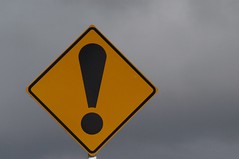
what are they trying to say?


warning
Originally uploaded by C Buckley.
This is my favorite road sign in New Zealand. That's all - usually there's no text on the sign. Just the exclamation point. It never fails to amuse me.

end of the tour, for now

No photos yet, but we have finished (for now) our great New Zealand road trip.
We covered just about the entirety of the North Island, going from Wellington up the west coast to Taranaki, then east to Rotorua, north to Whakatane, then further north, past Auckland to the Bay of Islands. A weekend there, and we headed further north, driving until we simply ran out of North ahead of us. Then we turned south, down the 90-mile beach, down to Auckland, east to the Coromandel and back to Whakatane, before making one long last day's push back to Wellington.
We saw lots of beaches, a few mountains, cities and small towns, rolling hills and enormous sand dunes. At times we dived whole-heartedly into the tourist attractions, but most of the time we were living out of our tent and car or staying with friends we've made residing in New Zealand.
Now it's time for a brief break back in Wellington, catching up with friends and catching our breath, before piling back in the car and heading for the South Island. We have no idea what happens after we get off the ferry in the South Island. Hopefully we can find some work and a place to live. And do some skiing.

Thursday, May 04, 2006

running away from summer

After a month on the road nearly always bathed in sunshine, we're headed back to Wellington today and it's raining. Probably a good way to get acclimated back into Wellington's weather (and the South Island).
We're finished with our North Island travels, after going as far north as we can, and seeing nearly all the the corners of the island. Pics and travel stories will follow over the next week or so, hopefully.

Tuesday, April 25, 2006

quick and dirty

This update will be of the variety spelled out in the title, since the Internet at tonight's hostel is slow and expensive.
We've been slowly working our way north along the top of NZ, and tomorrow are scheduled to get up to the very top - Cape Reinga, via a bus tour along the 90-mile beach. The beach is an unbroken expanse of hard sand along the west coast of the top of the country that is used as a highway for the adventurous.
We've had free places to stay along the way - a friend's beach-front house in Russell, in the Bay of Islands, was last weekend's accomodation. A week ago we got even luckier - stopping at a small local brewery by Taranaki we struck up a conversation with the brewery owner, who ended up letting us stay in a small cabin he had. Our most random social interaction so far - I'm hoping we end up beating it.

(and on another note, I've just passed 100 posts on this blog. Which seems like I've been seriously slacking. So, sorry.)

Thursday, April 20, 2006

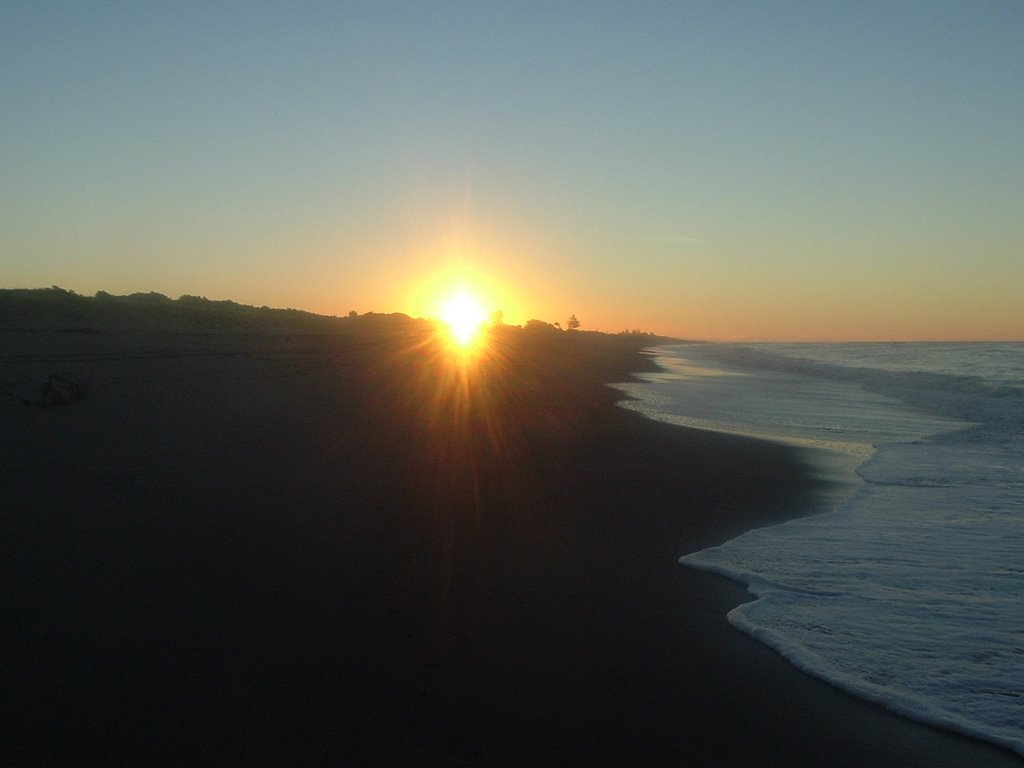
sunset in Whakatane

Our time in Whakatane - which also means our time with Internet - is about to end. We're headed for Russell, in the Bay of Islands, for the weekend. Meeting up with yet another Wellington friend who has a family house there (it's a lot easier to travel when you know people with houses).
We'll head up as far north as we can go, then start heading South again.

playing games

The mountains on New Zealand's North Island are shy. At least when I come calling.
The first few days I come to see them, they hide. They cover themselves in a veil of white, allowing only a demure peek at their uncovered lower extremities. A day or two later, they may lift the cover a bit to peek out without ever showing their peak, even though they know that's what I'm there to see.
Tongariro, Ngauruhoe, Ruapehu, Taranaki - all the same.
I made three different visits to Tongariro National Park, where the first three mountains I mentioned are located, before ever seeing the top of the mountains. One of those days I was skiing on Ruapehu, and could barely see the surface I was skiing on through the fog.
This past week we were in the Taranaki region, so named for the dominating presence of Mt. Taranaki. It was beautiful country, and the beaches had sun and blue sky. But when we looked behind us toward the mountain, all we saw was cloud.
Until the day we were leaving, when we woke up to see Taranaki unveiled, standing before us.

a few pics

From Wanganui we headed north along the west coast, spending a few days in the vicinity of Mt. Taranaki. Then east to Rotorua, where we met up with some friends and hung out at a salsa festival. The past few days we've been just north of Rotorua on the coast, in the small sea-side town of Whakatane. Here we've been soaking up the sun, hanging on the beach and abusing the hospitality of some friends we met in Wellington.

A few photos of our travels:


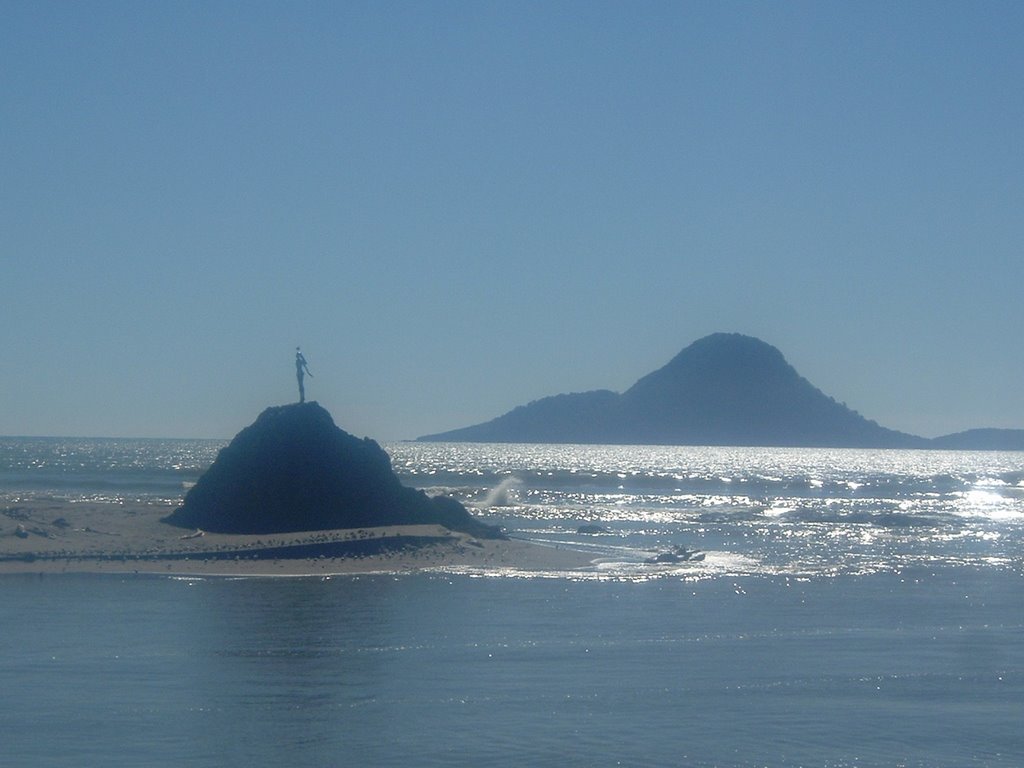
Statue at the mouth of the Whakatane River.


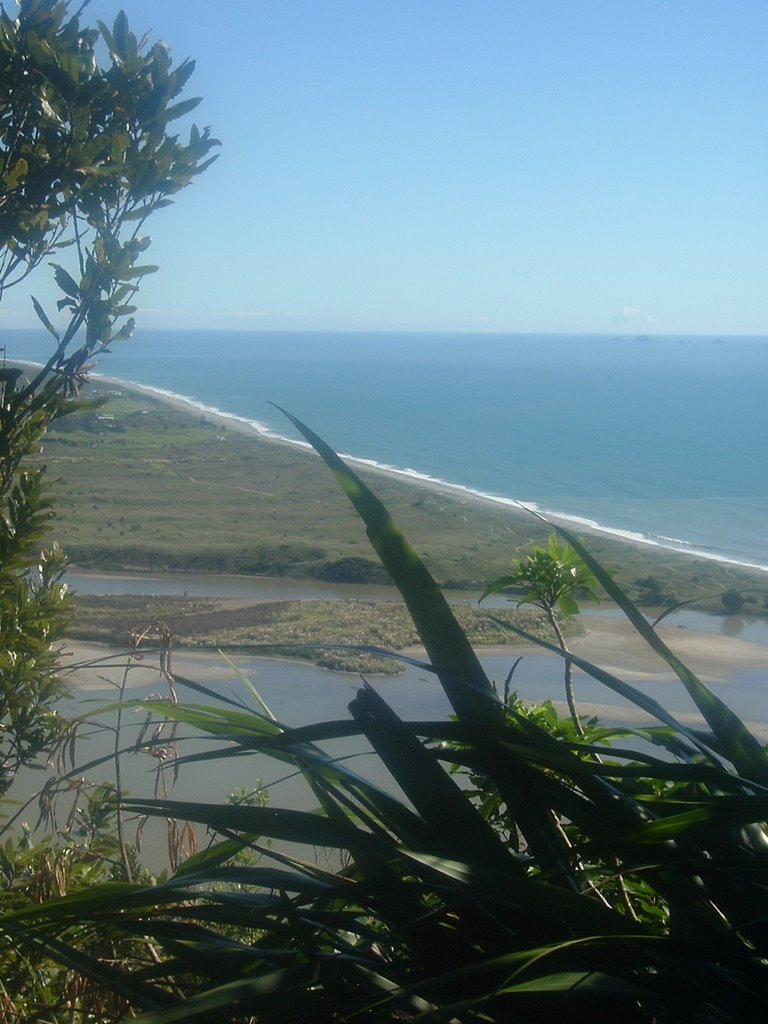
View of the beach by Whakatane, and a sliver of the Whakatane River just above its mouth.

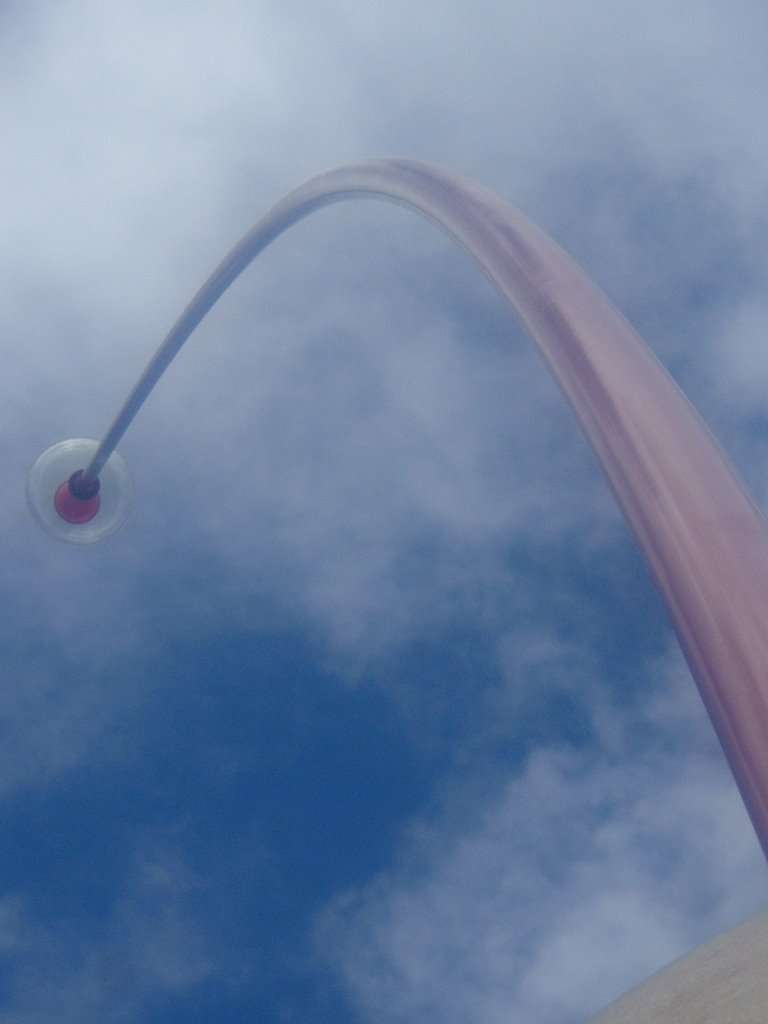
The wind wand in New Plymouth, a beach-front art installation.


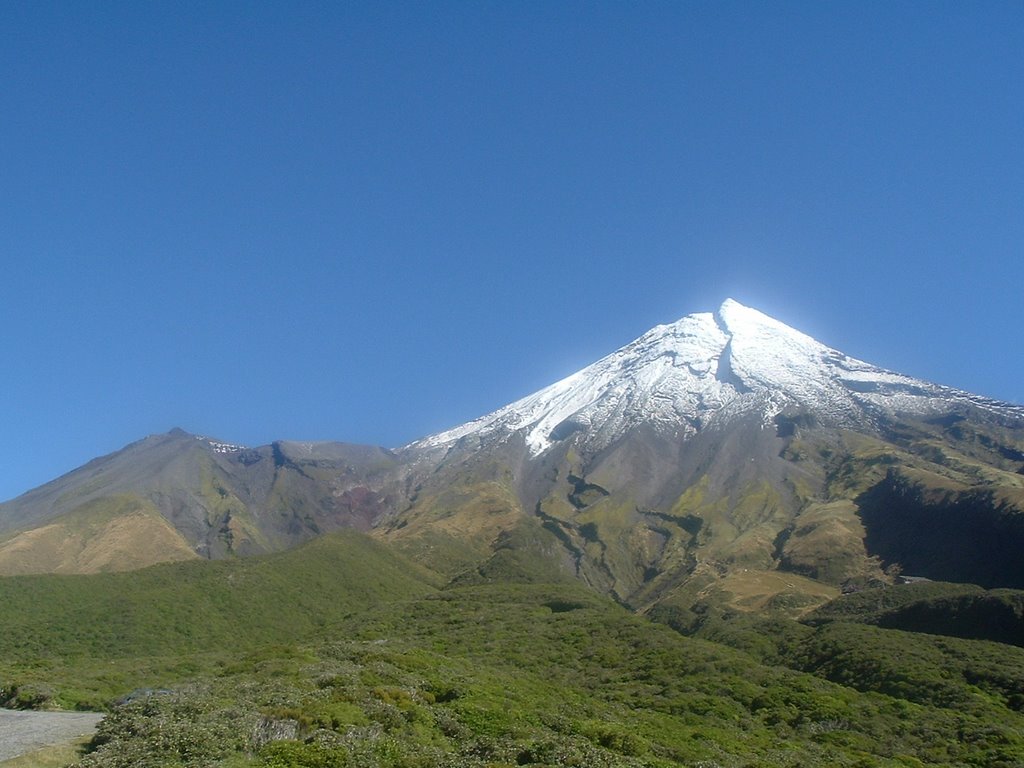
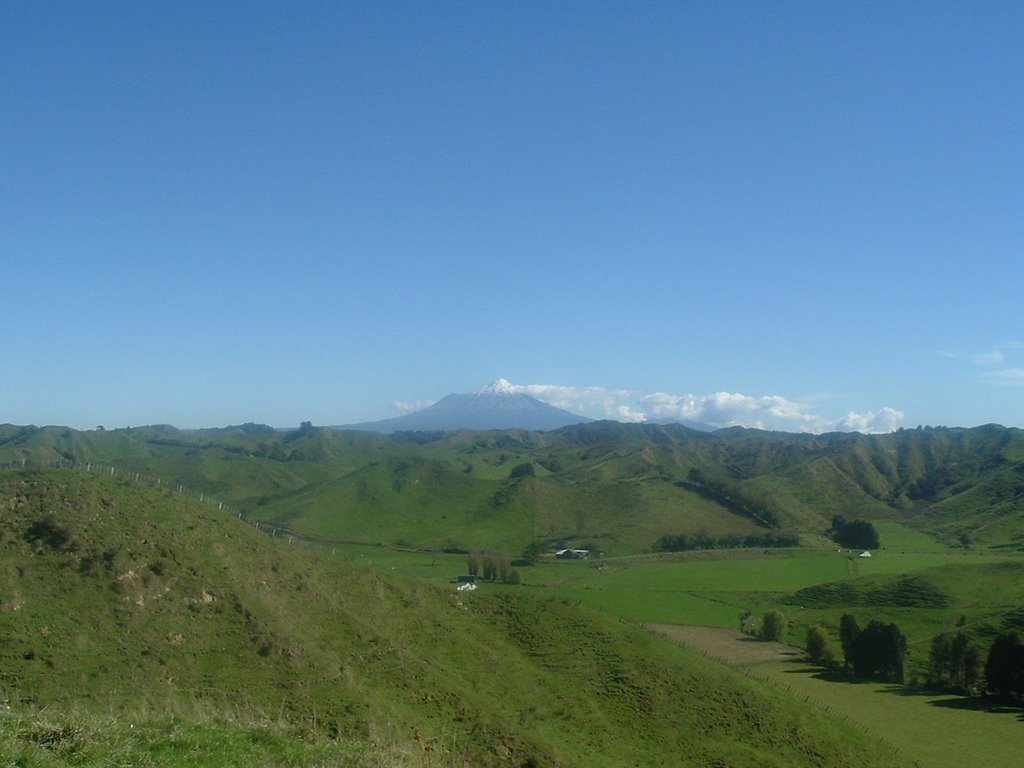
Our view of Mt. Taranaki the last day we were in the area.

And a little bit down the road.

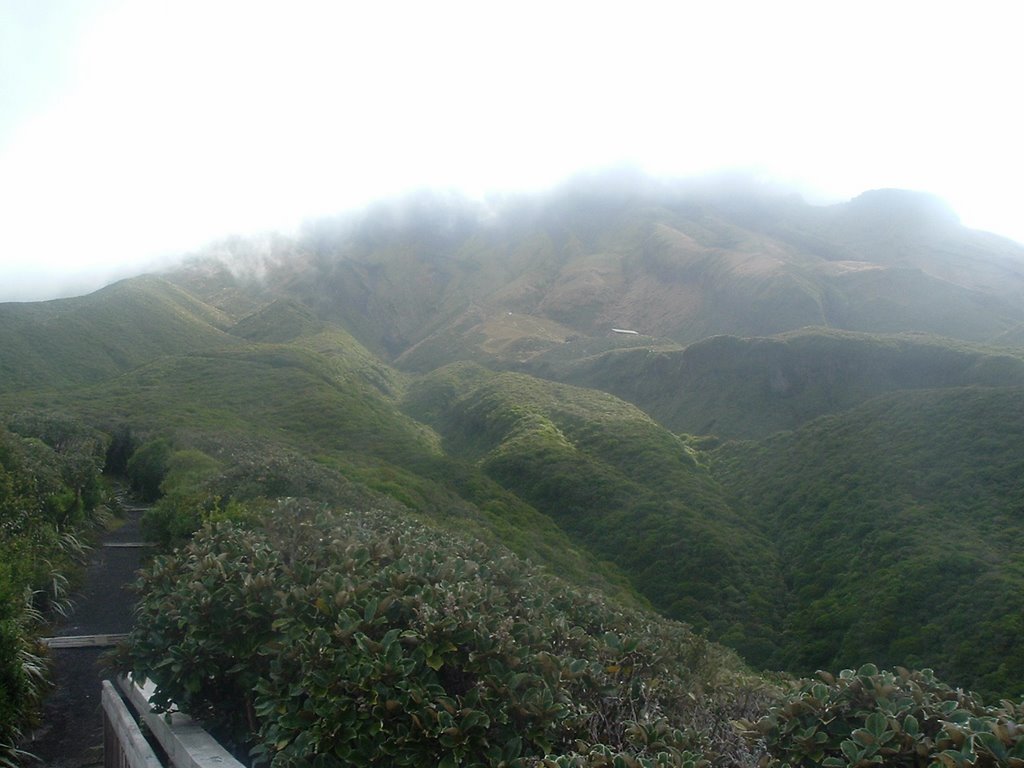
Our view the first three days we were there.

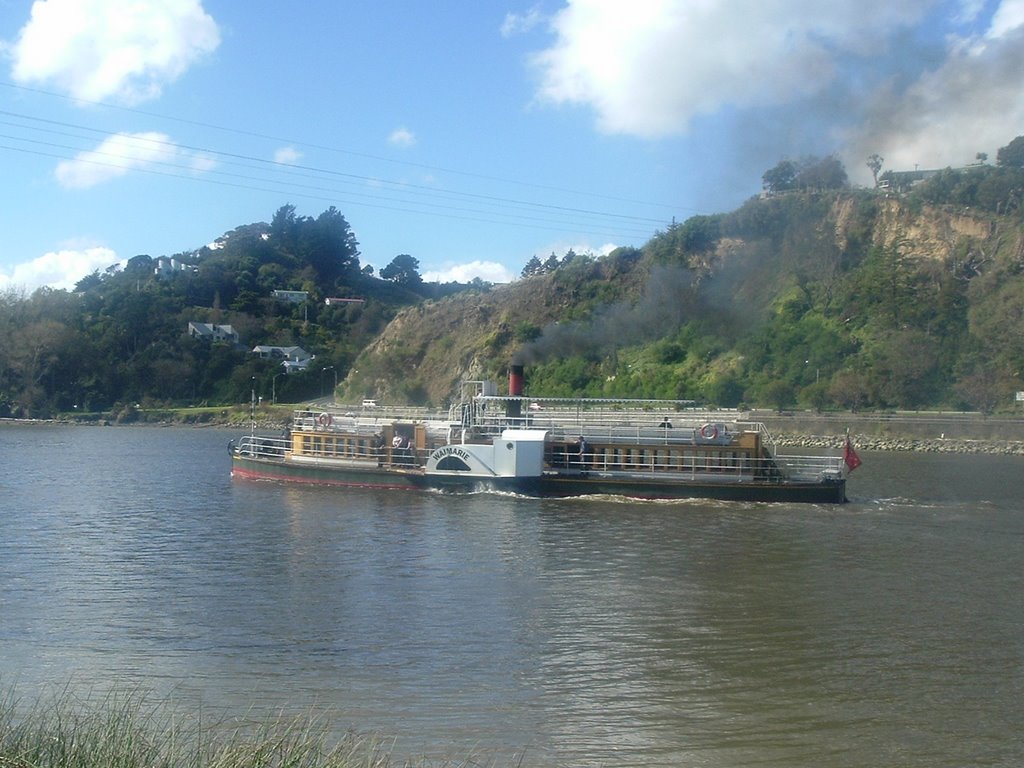
A restored riverboat on the Whanganui River.


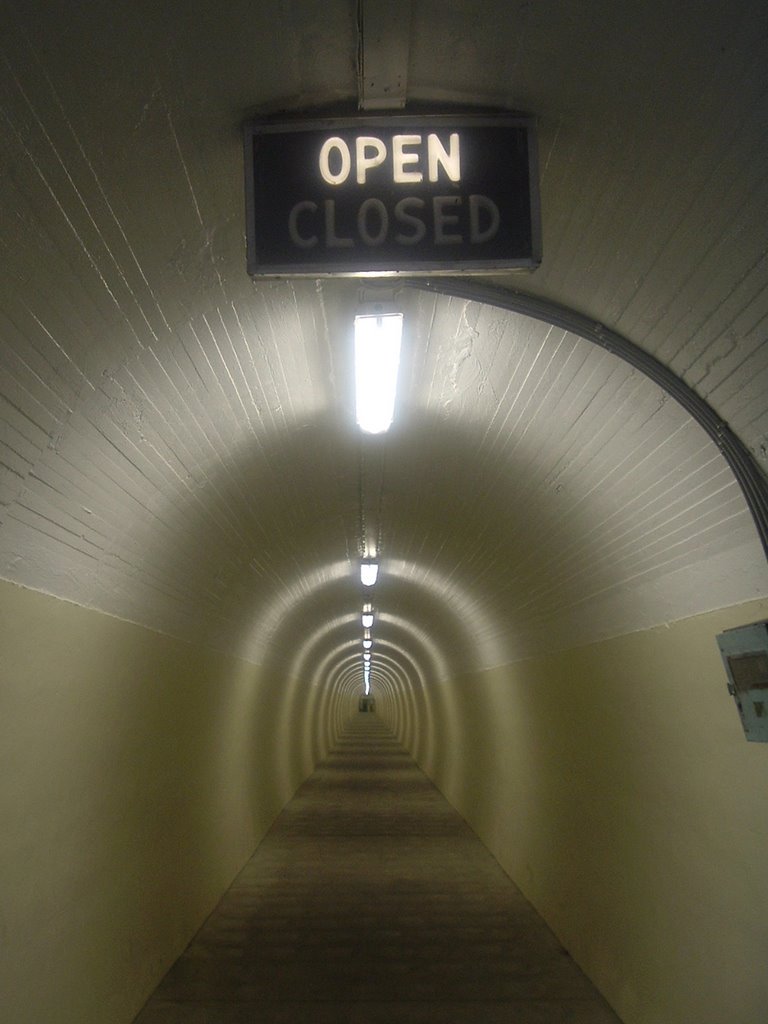
The tunnel to the Wanganui elevator. The elevator is a commuter elevator; the shaft runs through a hill from town to a suburb above.

the real reason we went to Wanganui


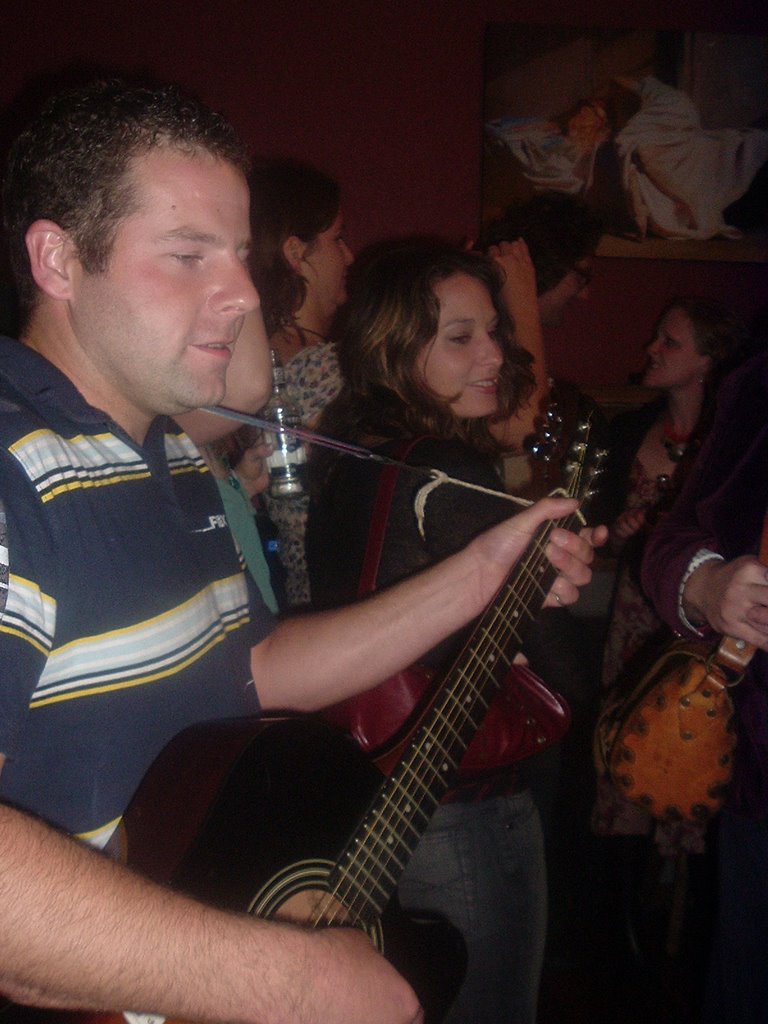
Our friend Paul, everyone. An Irish troubadour.

Monday, April 10, 2006

step one

Started our wandering lifestyle with a visit to a former roommate in Wanganui. In a nice coincidence, our arrival was the same weekend as a house party among his friends in this town (who we met before).
It wasn't all parties - we did get out and about in this river town. Drove up the road for a walk along the ridge tops looking down on the river. Took the underground elevator up to the tower overlooking the city. Watched the sunset from the beach at the river's mouth. Walked around a local park and aviary.
Wanganui is a city of about 40,000 on the lower west coast of the North Island, next to the mouth of the country's longest river - the Whanganui (the city and town have the same Maori name, but there are different ideas on how the word should be spelled). It's not much of a tourist city, but it has a decent feel and has an above-average population of artist types. Not a bad place to start out, although the weather has been rough. Patches of sunshine interrupted by violent bursts of rain.

Not sure where we'll head next, although north along the West Coast is the short-term plan. The North Island is shaped a bit like a four-pointed star, with the northern point stretched longer than the others. We've lived at the bottom of the south point, in Wellington. Now we're headed to the west point and Mount Taranaki. Eventually we'll head for the tip of the north point, where I hope there will be sunshine, and I know there are beaches. I'm clinging to the last remnants of summer.

Tuesday, April 04, 2006

one more day

We're staying in Wellington at least one more day before setting off on a road trip around the North Island (and eventually heading to the South Island, if our current plan holds). We've moved out of our apartment, packed almost everything we own in the car and are just trying to tie up as many loose ends as we can (as well as perhaps one more night out with the friends we have here).
We've lived in Wellington for about seven months, almost the entire time we've been in New Zealand. I remember the morning we landed in Auckland, getting in at about 5 a.m. after a 12-hour flight, the jet-lag and early-morning, low-lying fog combined to give NZ an eerie, surreal appearance. The atmosphere amplified the veneer of strangeness everywhere is covered in the first time you see it. Now, however, the strangeness is gone, replaced by the familiar. We've been nearly everywhere in New Zealand, at least driven by the general area. I know how to say the placenames. I know the street grid, and I know what businesses are where. I know where the bars are, where the restaurants are, where the little shops are. I can remember what it was like when the city was strange to me, but now it's like another place altogether.
The country as a whole has a bit of that feel, although once we're on the road we'll feel like travellers again, and we'll be in places unfamiliar enough to explore.
It's a feeling anyone who's moved anywhere knows - eventually a new place is an old place, even if it's New Zealand (or South Korea - sorry Stephen, I started this post after I read yours, but didn't mean for it to be such a blatant ripoff).
As the newness wore off in Wellington, the familiarity brought with it a growing set of friends. It'll be good to dip back into the traveling world of the new and unfamiliar, but it'll be tough to dip back into the traveling world of no friends to call upon.

Cape Palliser

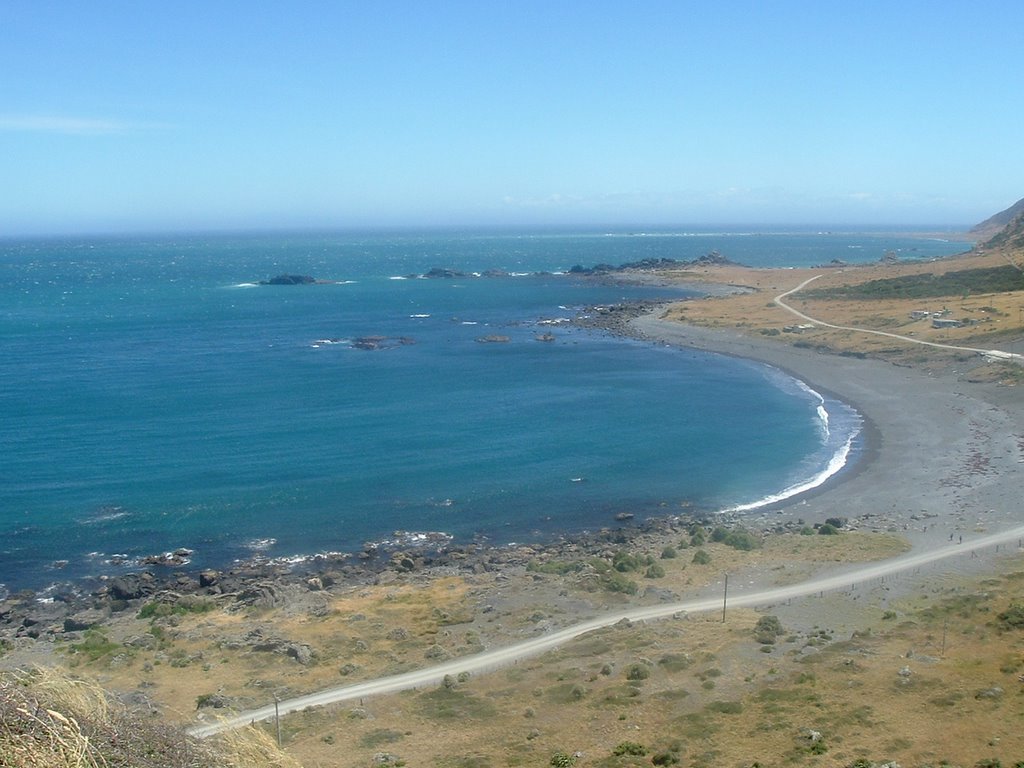
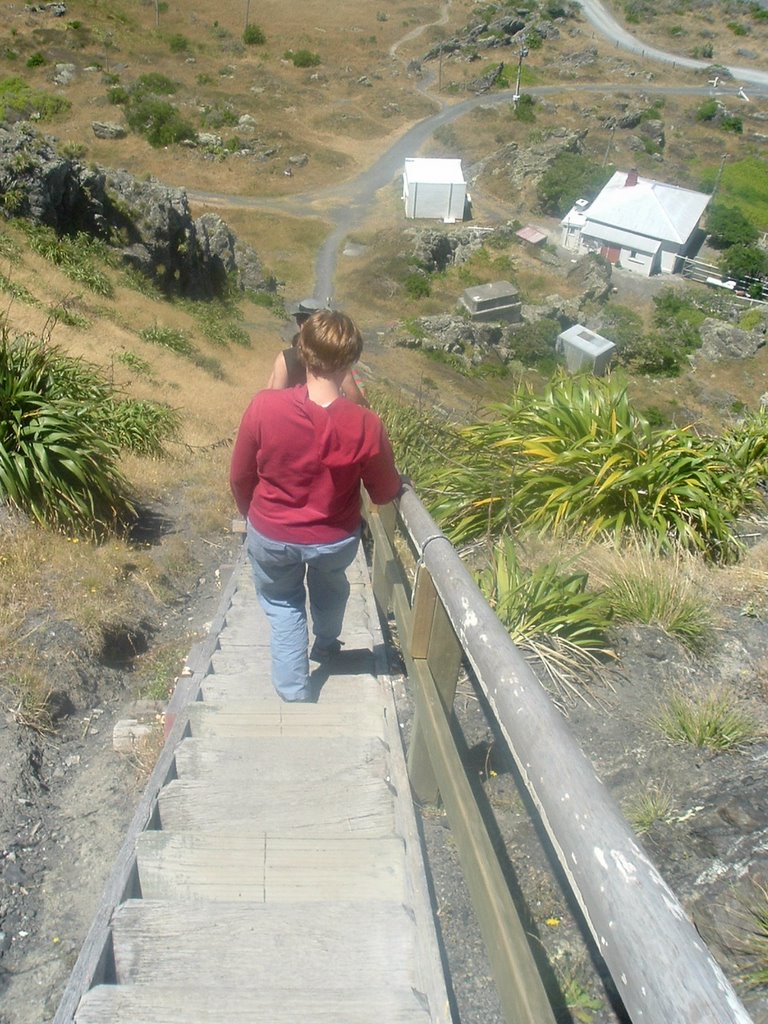
Another few photos dug out of my computer. These are from a weekend day trip we took from Wellington to Cape Palliser. The cape is just a few miles east of Wellington on the south coast of the North Island (and is the southern-most point on the island) but it takes a much longer drive over a mountain pass to get there.
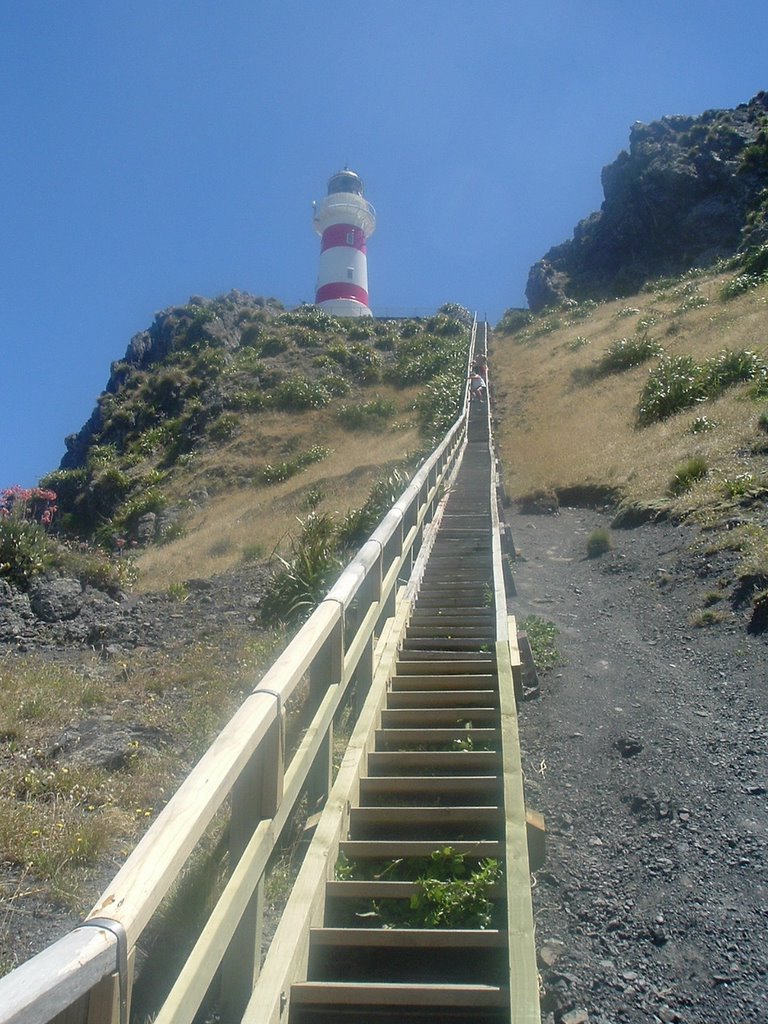
We followed the coast to the Cape Palliser lighthouse and seal colony. The day featured high winds coming from the opposite side of the hill from this staircase. It made the climb up the 250 steps calm, but the first thing felt upon reaching the top was a gust causing your brain to fear its hold on the platform.

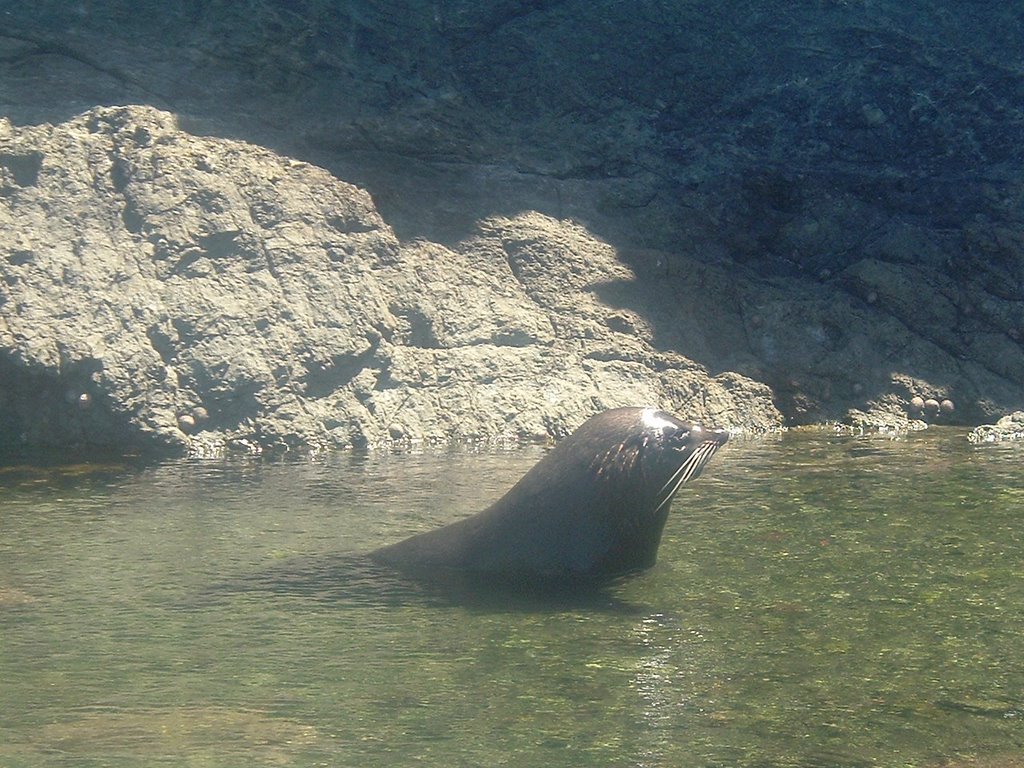
Underneath the lighthouse platform was a rocky outcrop housing a seal colony. It's far from the first seal colony I've visited here, but it is the closest I've been to a seal - there were several large seals on the rocks right near the access point, and as we climbed around the rocks we got within 10 feet of a few of them.
The seals mostly ignored us and the other tourists, although a few raised their head and growled at people who wandered to close. Since being in New Zealand, I've been warned a number of times about the dangers of seals, mostly if they are being antagonized or if you happen to wander between them and their direct route to the sea. So I didn't do those things. I did, however, almost step on a small seal pup that was hidden among the rocks.

Monday, April 03, 2006

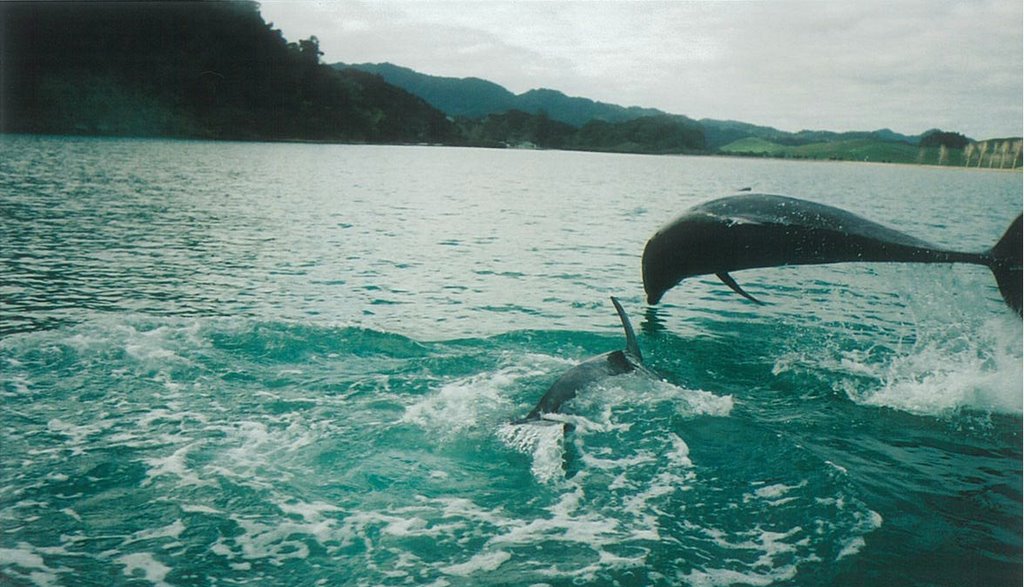
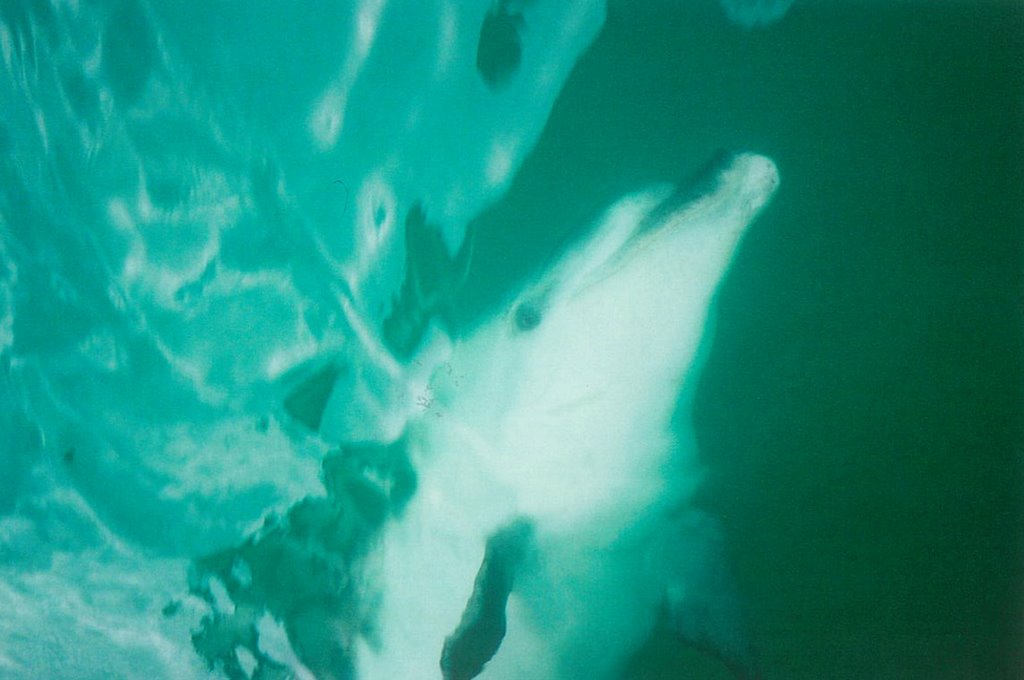
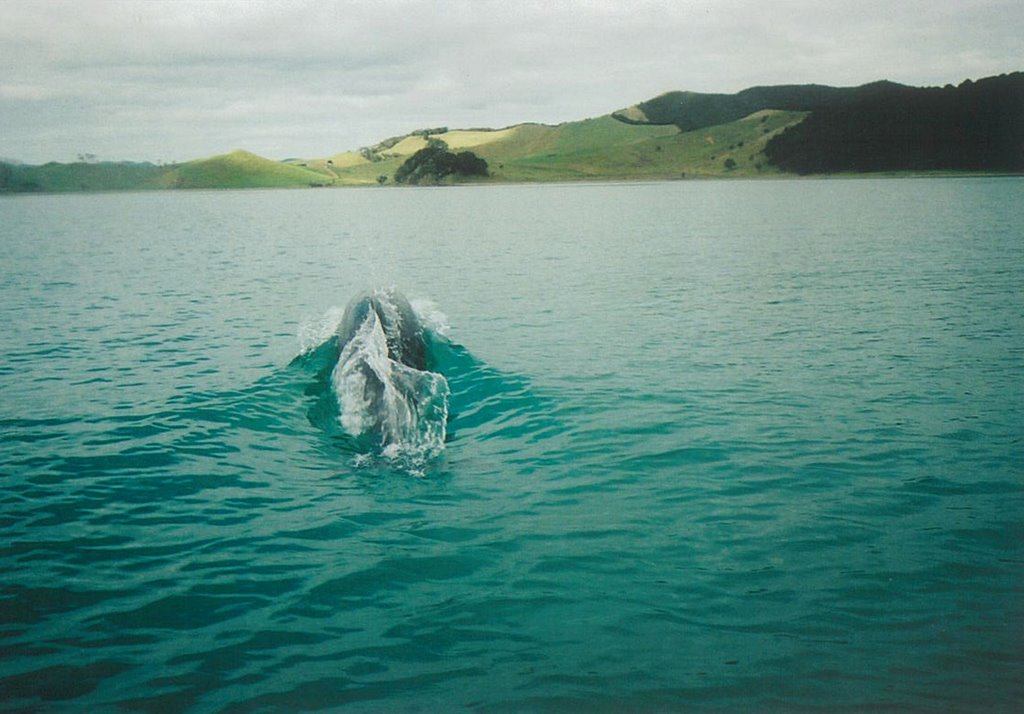
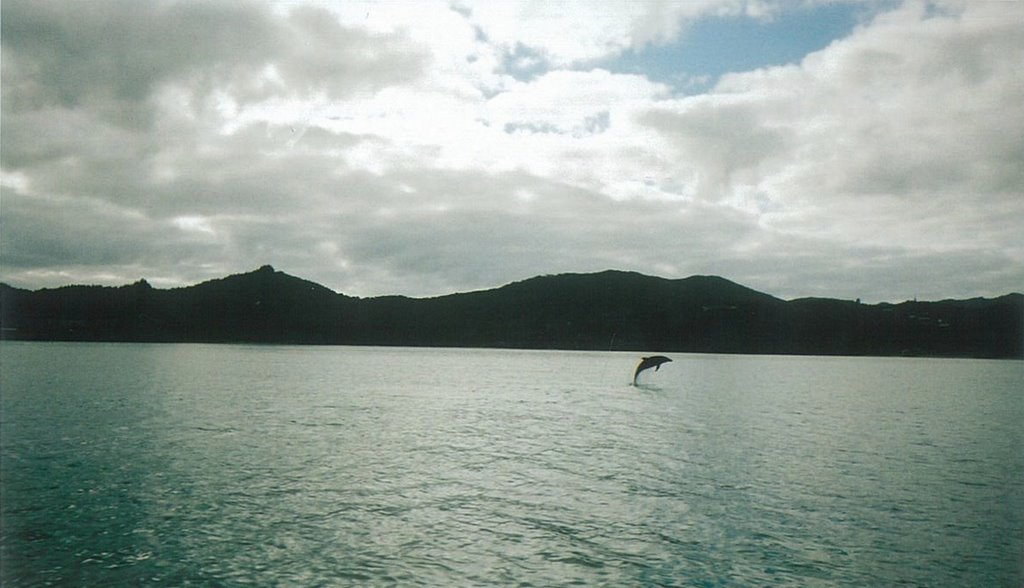
dolphins

Photos from our first weekend in New Zealand, but which were on a film camera and have just now been scanned:


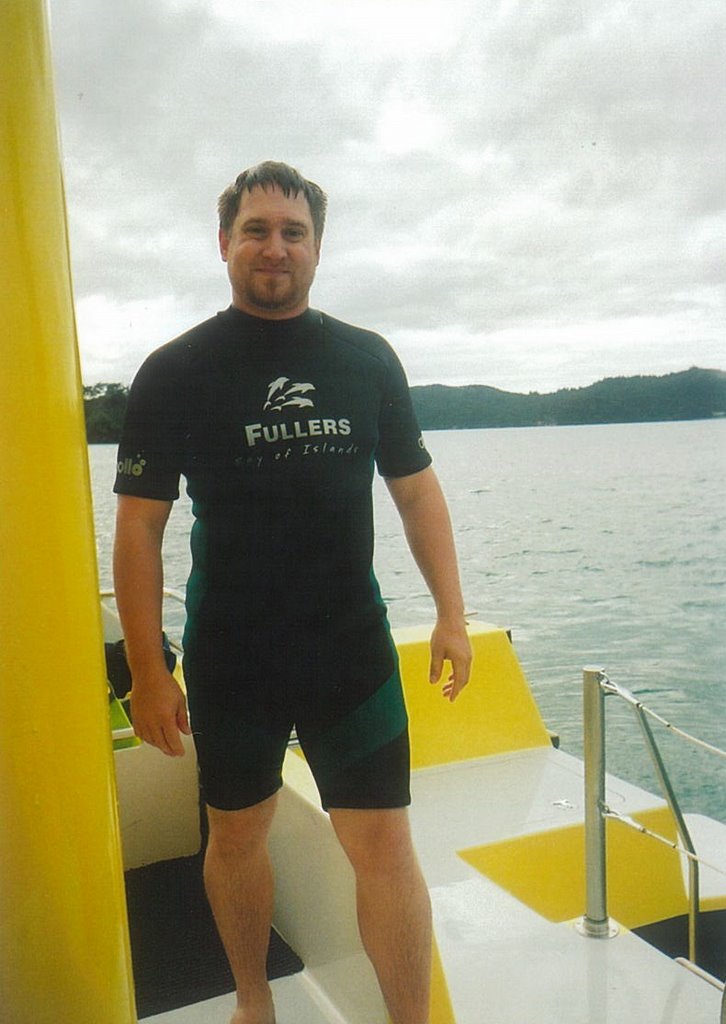
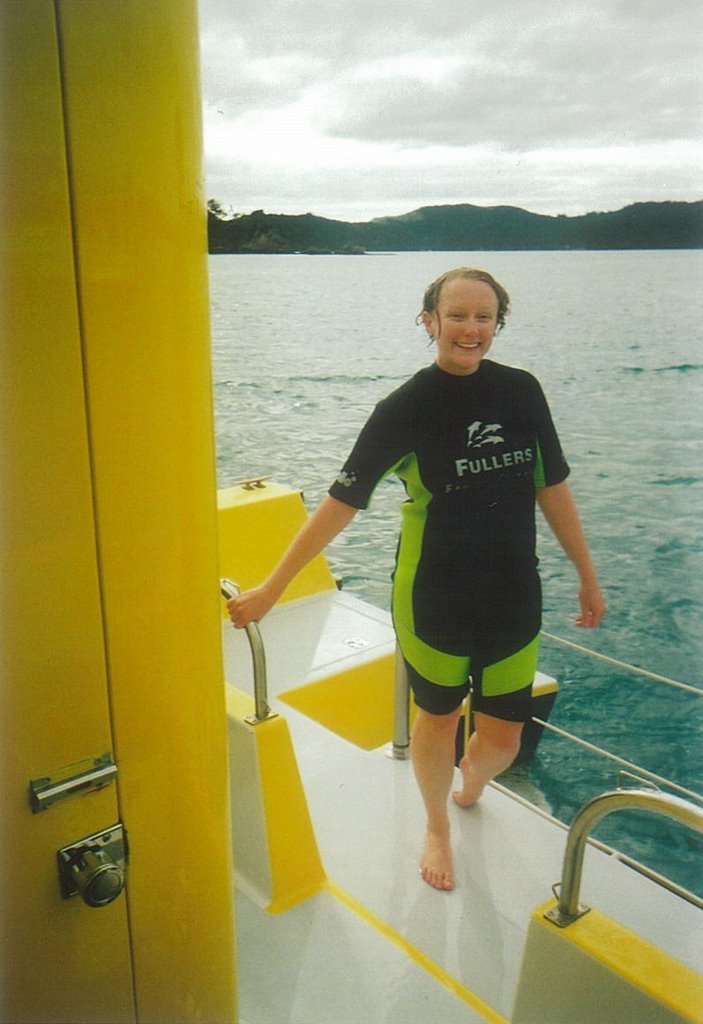
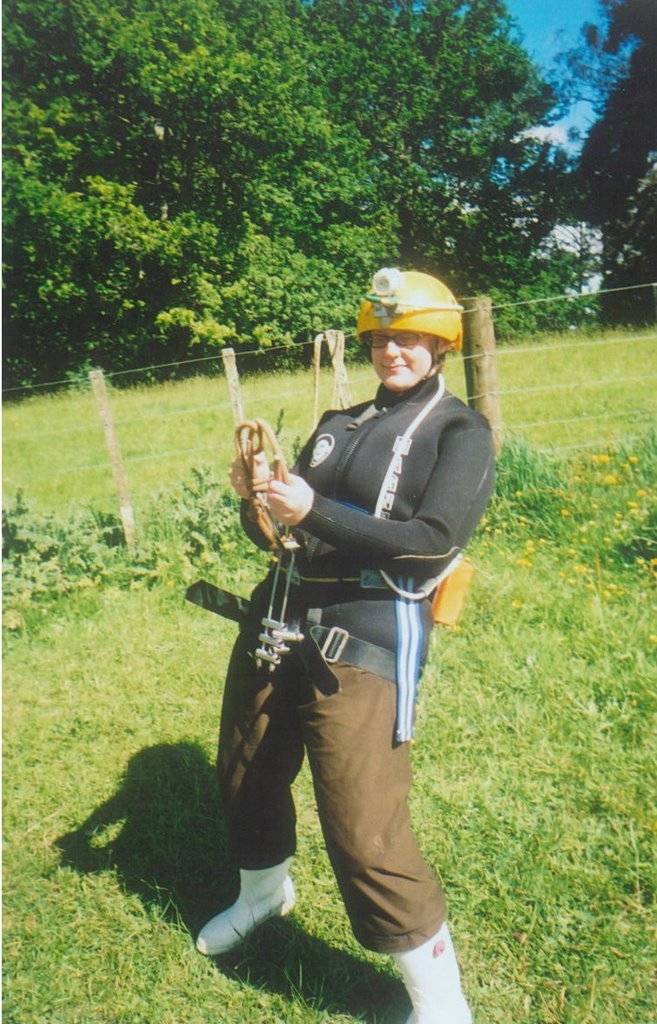
wetsuits


Sorting through some old photos before I pack up the computer for the next month or so:

These photos have one thing, and one thing only, in common: they document the three times so far we've paid for an activity that included wearing a wetsuit.
1) Swimming with dolphins in the Bay of Islands.
2) Inner-tube rafting through a glow-worm cave
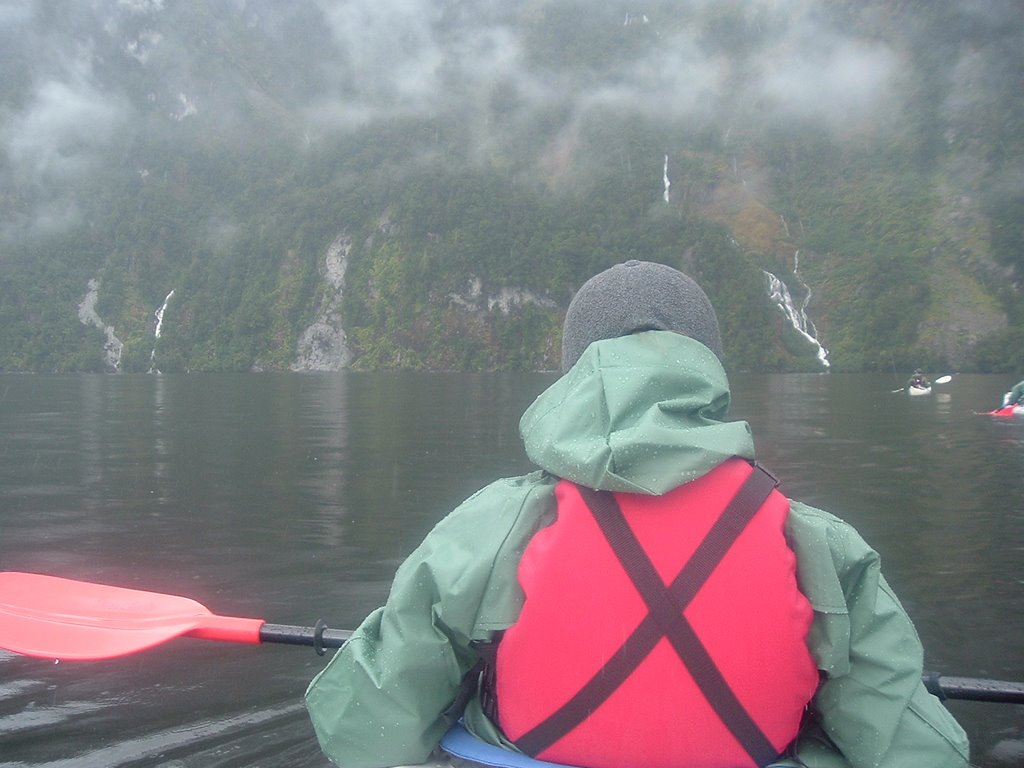
3) Sea kayaking in a downpour in Fiordland's Doubtful Sound.

The reason I bring this up is the third activity, in the list and in chronological order, was the only one to give us a dry wetsuit. This is a small thing, but it was noteworthy enough for us to tell our kayaking guide, who asked us to pass the detail along to others.
And now it is passed.

Sunday, April 02, 2006

mmm...

One of the easiest ways to amaze New Zealanders is to talk about American food. They have an idea that Americans constantly practice a crazed gluttony, and they're probably right.
New Zealanders harbor the suspician that American order food and it's dished up in portions big enough to require a forklift. This suspician is highest in people who have actually been to the States.
There's good reason. A large Domino's pizza here is the size of a medium in the States - possibly a little smaller. A large Coke at McDonalds here is about the same as a child-size in the States. New Zealanders can't comprehend the reason Americans are served such things (and to be honest, I'm not sure anyone can, really.)
And when I start talking about things such as fried turkey, or stuffed, deep-fried burgers, or my Atlanta friend's favorite, the hamdog (and its cousin, a burger encased by Krispy Kreme donuts instead of a bun) the Kiwi expression turns from one of incredulous to indignation to just trying to keep their head from exploding.
Fun times. (And all this really makes me want a stretch here).