Sunday, August 27, 2006

it's big

After a year in New Zealand, you lose track of the scale of things elsewhere. Australia has pounded back into my brain a scope closer to my US experience.
There are real cities here, cities you can walk around in for 20 minutes and still be in the city. There are things a day's drive from each other, and there are roads wide and straight rather than twisting and narrow. There are also legal speed limits in excess of 100 kilometers an hour (I was giddy with joy the first time I saw a sign for 110 on a four-lane road outside of Melbourne. Finally, the chance to drive as people were meant to drive. Quickly.)

All that I'm enjoying. I'd forgotten how much I loved being in the middle of a large city, just feeling the bustle going on around me. Even in Auckland, the heart of the CBD was only about two blocks wide. In Wellington, I could walk from one end of the city to the other in about 30 minutes. Sydney is on a proper American scale - alone, it has more people than New Zealand.

There is a downside. New Zealand was a small enough market for some of the American consumerism to pass it over as not worth bothering with. Australia seems to have embraced American-style chains and consumerism. I feel a bit like I returned home, with all the American brands I'm seeing for the first time in a year.

In a lot of ways, Australia (especially the cities) may as well be the States. But the cities we've seen so far - Melbourne, Sydney and Brisbane - all have a pleasant bit of character too many US cities lack. Mostly it's about water. Melbourne and Brisbane are built around rivers and Sydney has its harbor. The water softens the harshness of the city landscape.

marketing

I know the soundtrack here is slightly different. Not very different - the radio playlists are, I'm guessing, almost identical. However, there are a few songs I know are distinctly Kiwi and probably haven't been heard over there. Therefore, I'm assuming there are a few others I hear regularly and don't know are Kiwi, and don't realize no one else in the world is hearing as often as I am.
It's a self-evident fact, but it's not something I'd ever really thought about before. I've realized, however, Australians and New Zealanders think about it often.
The States is still the ultimate market. It's where the money is, and where the fame is. But at the same time, the Aussies and Kiwis have a bit of a fatalistic streak to them. Someone the other day was amazed I knew who AC/DC was. They didn't realize the band had ever had any sort of profile in the States. Of course, I imagine most Americans had no real idea AC/DC was Australian.
And sometimes the pessimism is warranted. Apparently, one of the biggest Australian rock bands of the late 80s/early 90s was some group called Cold Chisel. If I've ever heard one of their songs, I don't know it.

And another thing, while I'm on the subject of marketing. I haven't seen a Foster's over here at all. There is a lot of Australian beer, but Fosters isn't the common name.
(And one other point on beer: for some reason, the only major U.S. beers to be exported are Budweiser and Miller Genuine Draft. Who struck the deal putting those two together?)

Saturday, August 26, 2006

missed opportunity

When we flew from New Zealand to Australia, first we flew from Christchurch to Auckland. I was looking forward to getting an aerial view of the country we had seen on the ground.

Unfortunately, the day was rainy and the entire country was covered in clouds. The day was horrible on the ground. It was a bit odd to rise above the clouds and see the sun shine and blue sky. Instead of the view of the NZ landscape, we got a blank canvas of white.

Friday, August 25, 2006

rapidly running out of time

Just got off a boat after three days of sailing. Just have a few minutes before catching an overnight bus north to Cairns. Spending two days there, then flying to Uluru/Ayers Rock on Monday. A few days in the outback, and then back to Sydney for our final days in Australia.

I'm loving this country. The weather helps - 75 every day and sunny in the middle of winter - along with the beaches and everything else. Not sure I want to be here in summer, though. Might be a bit hot.

better late than never

The posts I wrote last week but couldn't get off the laptop:


Aug. 20
Brisbane
A day of relaxation. It's an odd feature of traveling: you often need a break from the vacation. After two weeks traveling in Australia, combined with our travels the last month in New Zealand, it was time for a day off.
We ended up with a free place to stay for the first time in Australia. One of our former roommates from Wellington is from Brisbane, and we ended up staying here with his mom, who has served as a tour guide and host.
Today we took sight-seeing mostly off the agenda. Woke up and headed to a city park with barbecues for a brunch of lamb chops, eggs and grilled vegetables. Then a walk around the city botanic garden, mostly checking out local birds, and an afternoon of catching up on newspaper reading, TV watching, e-mail writing and blog postings.

Tomorrow, the travel gears up again. We catch a 7:45 a.m. bus north to Hervey Bay and Fraser Island, the world's largest sand island and apparently one of the scenic highlights of Australia's East Coast.

Aug. 19
A day to see Brisbane. Starting in the late morning, we hopped on a CityCat, a catamaran plying the Brisbane River for public transport needs. Far cheaper than the average river cruise, and it comes with benefits - for $3.60 each we get an all-day pass to the city's ferries, buses and trains. We get the most out of our money. After a walk around the arts center (stopping in the requisite museum) we ride the CityCat up the river to the end of the line and back. That takes up the afternoon, then we head out (with our host) to eat and people-watch on the sidewalk of the nightlife district. Evening concludes with a show - a string quartet performing rock covers and a few originals. The bio says "we're an independent rock band that just happens to be a string quartet." The originals lean more toward lounge blues, but the rock covers produce the appropriate chaos of noise.

Aug. 18
Leave Surfer's Paradise at noon and bus two hours to Brisbane (morning taken up with napping on the beach after dropping the bags at the bus station).
We've phoned ahead - we're staying with the mother of one of our friends from Wellington. First, we have to kill the afternoon in Brisbane. I walk around downtown and end up in a small museum. Kirsten's time is spent talking to travel agents. She's contemplating returning home, as her dad has some health issues. (In the end she decides on Saturday to scrap the idea, for now).
Our host, Jane, fills the evening playing tour guide. She drives us to all the city sights, including a night view of the Brisbane lights from a mountain lookout. Cities always look good from a high night vantage point, and no exception here.

Aug. 17
Bryon Bay to Surfer's Paradise
Surfer's Paradise isn't. There's a long, gold-sand beach, but it's certainly not a special beach in this country of special beaches. There's also not a particularly good surf.
What there is, is property developers. Glass and steel high-rise condo and apartment buildings, loads of retail shops and restaurants. LIke the worst parts of Florida. Even ran across a run-down amusement park in the middle of it all, the kind of gaudy attraction the Mississippi beaches were littered with. A few amusement-park rides, a free-fall swing, mini-golf, all on a concrete lot sprinkled with dirty astroturf and signs screaming out about the thrills you'll have.

Aug. 16
Bryon Bay
A horrible winter's day.
Well, an Australian winter's day, anyway. Must be about 75 degrees, sunny, with a bright blue sky and we're hanging out on the beach.
It was a bit of a late start today. Met up with some Irish friends we'd met in New Zealand, and one thing led to another until it became early in the morning. So today didn't happen until sometime after lunch. When it did, it was quite nice.
A couple hours on the beach soaking in the winter sun, which feels more like summer than New Zealand ever did.
After the beach, we continued on the theme of being slightly late. Headed out to a nearby town we'd read had a spot to view platypus. The town wasn't quite as nearby as we'd thought, and the Lonely Planet guidebook's one-sentence description of the site wasn't as helpful as we'd expected. Asking around at gas stations got us to the pond, but not until the last of the twilight had disappeared.
We looked down into the black water anyway, glimpsed a darker shape and heard a splash. So I heard a platypus. And you can't prove otherwise.
We got back in the car and figured we were halfway to Nimbin, so we might as well see the town.
Nimbin is a bit of an oddity. It's a tiny place, with barely a block's worth of shops, and it's well off the main road. Yet every backpacking tourist takes a day trip to the place. Its appeal is based entirely on its reputation as a town where marijuana laws are unenforced and hippies roam the streets. Hard to tell if the reputation is deserved, by the time we get there (7 p.m., but after nightfall) the streets are deserted. Apparently it's a tourist destination only because of the amount of tourists.

Aug. 15
The bus leaves Sydney at 7 a.m. and doesn't stop in Byron Bay until 8:30 p.m. We're on this bus because we're trying to meet some friends.
A long bus trip, like a long plane ride, places you in a bubble outside reality. Once you sit down your only responsibility, deciding on a destination, has already occurred. During the trip you can't do anything of consequence. You're disconnected from the world. I kind of like the feeling, as long as I've got a book to read or music to listen to or some sort of entertainment to keep me out of my own head and kill the time.

Aug. 14
Sydney - Bondi Beach and the coastline
We head out to the famous Bondi. It deserves the hype - the beach isn't huge, but is still a 15-20 minute walk from one end to the other in the sand. It definitely has the scenic bit down, with the bright sand and blue water curving into the fashionable houses and shops.
The part I can't get over, however, is the crowd. It's a Monday afternoon in what would be February in the rest of the world, and there are people everywhere. The sun is shining but a bit of the warmth is taken off by a breeze. There are some folks in jackets and long sleeves, but most in shorts and sandals or bikinis.
We walk for about two hours south along the coast, a route taking us from the beach along rocks and cliffs, then to another small beach, then the pattern repeats. We walk until the sun sets, then realize we don't know how to get back short of retracing our steps. There's not enough warmth or food for that option, but we end up stumbling on a bus line that works.

The evening is spent deciding whether to buy a bus pass or a train pass for the rest of the trip, since we want to leave Sydney tomorrow. This is a decision Kirsten feels should have been made earlier. It highlights a basic difference in our preferred modes of travel: I like a loose outline of destinations, with few actual details planned out in advance and just taking it as it goes. Kirsten would prefer having a slightly more detailed outline in advance. My approach generally wins out by default, which suits me fine but occasionally leads to frustration in my travel partner.

my jump

Here it is. The video from my death-defying bungy jump, if you want to see it.

Monday, August 21, 2006

missing a connection

I typed up entries for the last 10 days or so yesterday thinking I had a connection for the laptop, but in the end the connection didn't work. So the entries are locked away on a hard drive without a 'net connection.

They'll get up eventually, but for now:

We headed North from Sydney to Byron Bay, where we met up with some Irish friends we'd met in New Zealand. Hung out on the beach - winter weather here isn't bad. It's been 75 and sunny every day.

From Byron we've continued North - spent the weekend in Brisbane and today moved up the coast to Hervey Bay. Tomorrow we're booked for a day trip to see Fraser Island, apparently the world's largest sand island (complete with lakes and rainforest) and then further up the coast for a three-day sailing trip around the Great Barrier Reef.

From there we'll head further up to Cairns, then into the Outback to see Uluru (Ayer's Rock) before returning to Sydney and flying on to Bangkok.

Sunday, August 13, 2006

sydney

We took the train from Melbourne to Sydney last night, after catching an Aussie Rules game in Melbourne. Sleeping in economy class seats on a train is not the optimal situation, so thankfully our hostel let us check in when we arrived at 7 a.m. and get in a nap (it's like two sleeps for the price of one!)
The rest of the day was spent wandering around seeing the obvious sights - the Opera House (it's not as white as the pictures would have you believe; there's actually a gold tinge to the coating), the harbor, parks, and the general city. Not enough time to form a real impression of the place, but the city is definitely pretty, especially on a sunny spring day with the harbor filled with sailboats.

----------------


On Aussie Rules Football:

It's the simplest incomprehensible game I know. The rules are simple: kick the ball between two posts in the ground to score. Other than that, the only real rule is if you catch a kicked ball in the air, no one can touch you while you kick. However, the game itself is chaos and often absolutely impossible to follow for a first-timer.

The other experience of note was the stadium itself. Australians are some of the world's biggest gamblers. In the stadium concourse, along with the windows to buy undercooked hotdogs, meatpies and beer, was a sports book. You could walk about 200 feet from your seat and put a bet down on the game you were watching, or any other game you could think of.
What truly amazed me, however, was the sheer number of people sitting there watching and betting on horse races around Australia. There are sports betting facilities in nearly every pub in the country. You certainly don't need to buy a ticket to a football game to bet on horse racing. And yet, that's what people were doing.

melbourne

This is going to be a crazy whirlwind tour of Australia, with just a few days in any given stop. Impressions of the first stop, Melbourne, was of a really nice city. Especially at night, the downtown is beautiful, with the lights of the buildings reflecting off the river running through the center. It has a ton of public transport options, including a large tram network and free city center tourist trains and buses. It also has several different neighborhoods with different feels, good nightlife, a ton of museums and cultural options. A good city to visit.

It also feels more like the States than anything has since I left.
Perhaps it's just that I've forgotten exactly what an American city is like after a year in New Zealand, but Melbourne is big enough (about 3 million people) to compare with a fair-size US city, and it looks just like one as well.
No where in New Zealand felt like a big US city. A lot of NZ felt like the States - the same fast-food chains, the same type of stores - but a lot of it didn't. Everything was on the wrong scale - even the big cities just weren't really big. Sydney has more people than the whole of NZ. Perhaps that's why in Melbourne, and even Sydney, what I've seen of it, I feel more like I'm back in the States. It's the first time I've been in areas of similar scale.

koalas and whales and roos... oh my!

After a couple days checking out Melbourne (mostly walking around the city, as well as stopping by a museum or two and catching a film festival showing - it wasn't all hanging out in dive bars) we rented a car for a two-day trip west along the Great Ocean Road.

The draw of the road is the scenery - for most of its length, the road follows a heavily eroded cliff coastline. The water has eaten away into the cliffs, leaving all sorts of odd formations such as arches and rock stacks in the water a few hundred feet from the rest of the land.
All that was well and good and dramatic. But after a year in New Zealand, you get a bit spoiled with scenery. (About an hour outside Melbourne, Kirsten was reading a brochure on the route. She looked up, saying "This says the views are spectacular. I don't think it's that spectacular." It was at this point we realized just how spoiled NZ had left us).

What was of real interest was the wildlife. We saw kangaroo crossing signs from the beginning of the trip, although the animals themselves were nowhere to be seen as we started the trip. Instead, we scored a sighting of something we hadn't expected. We stopped at a lookout above a surf beach a little after noon, and saw something poking out of the water just off shore. At first I thought it was a bunch of kelp floating along, until it started moving. Pulling out the binoculars, we could see bits and pieces of a whale (whatever it decided to have above the water at any given time), one of the few things we hadn't seen in New Zealand.

A little further along the road was a koala sitting in a tree just off the roadside, looking mostly like a ball of grey fur. And just before nightfall, we passed a kangaroo sitting contendedly at the side of the road, completing a decent trio of sightings for our first day of traveling Australia.
Even got a repeat the next day, when we stopped at another lookout and caught two whales playing in the surf.

Watching a whale, especially from shore, is an odd experience. There were no dramatic leaps out of the water, and precious few flips of the tail. Mostly it was views of the back, which looks for all the world like a rock which happens to be somehow bobbing up and down in the water. Every now and again the black back would disappear, and a flipper would slip above the surface. The most recognizable part of a whale isn't a part at all - it's the spray of water it makes when it breathes. That's the only way I was able to conclusively tell what I was watching was a whale at all the first day.
It's an interesting experience, watching one of the world's largest creatures, but watching just a piece here and there, occasionally having it slip out of view completely.

Monday, August 07, 2006

another stamp in the passport

Landed in Melbourne tonight, making it into Australia with no troubles.

First impression of Melbourne is of a beautiful city - we're staying right downtown next to an urban river lined with skyscrapers, green strips of park and walkways. Each downtown building seems to enhance its presence with colored lights, and the blues and greens reflect off the river. Also we're staying in a hostel affiliated with one of the best dive bars I've seen since leaving New Orleans. (I hadn't realized until now, but New Zealand just didn't have many dive bars. It had rough, rural local pubs and seedy pubs in town. It didn't have any real urban dive bars of the kind New Orleans excels in.) Didn't actually have too much time to explore, since we got in after dark. The weather is already better than what we left, so hopefully we'll get a good day tomorrow to see what the city has to offer.

Sunday, August 06, 2006

changing points

This is it - tomorrow we leave New Zealand after more than 11 months and fly to Australia (at least in a week or two I will once again see a beach in beach weather).

I haven't really had a chance to get nostalgic about the whole thing, since I'm still thinking more about the next four months of travel than I am about the past year of living in New Zealand. I suppose the nostalgia will be crippling when I return to the States around the first of December.

Below are a few more posts I wrote over the past couple weeks. Just cleaning out the New Zealand notebook. Hopefully I'll have the chance to post semi-regularly during our travels; I'll at least try to update once every week or two.

excess baggage

One of the things I didn't realize when we came here, and the main reason it's so hard to pack now, is the airlines treat you differently when you're American.
Actually, to be exact, they treat you differently when you're traveling to or from the US. When we came here, we were each allowed to check two bags. They could weigh a total of something like 75 kilograms, or a number almost as large.
Now that we're leaving, and we're not flying directly to the States, the numbers change. We're allowed to check one bag each. It can't weigh more than 20 kilograms.
We came over with one large backpack, one suitcase and some carry-on bags. Each. Now we have to sort all that stuff, along with everything we've acquired in the past year, into the one bag of 20 kilos for the next four months; what's worth paying a hefty fee to ship home; and what we're willing to get rid of.
It's a pain for us at this point in time. It's a perk I'm going to use happily in the future, I'm sure. But it also makes me curious as to how the discrepancy came about: I don't think we pay any more in airfares for the privilege of carrying more luggage. Is it just the airlines are more worried about upsetting Americans who can't carry every worldly possession than they are about upsetting any other nationality? Do we rate more highly on the airlines' service list since we spend more money? Is it a grand social experiment? Or are the airlines just giving into the reality that Americans have more crap, are more attached to it and put up more of a fuss if they can't have it? That's probably it - we get to carry more luggage so the airlines avoid having to deal with our tantrums.

money

New Zealand is small and technologically it's generally behind - its Internet connections are slower and more expensive than most developed countries, its power grid can barely keep up with demand, its electronic goods are more expensive.
However, its small size also allows it to implement national changes quickly if it wants. This week, the country not only phased out the 5-cent coin (they got rid of the penny some years ago), it's also changing the size of all it's other coins (right now, New Zealand has some of the biggest coins in the world. I came across some US change the other day, and was struck by how small and thin it seemed in comparison). For the last week, the new coins and old coins have both been used, a situation that will continue for three months, at which time the old coins won't be accepted anywhere. Almost no one seems to care or even notice, except the vending machine owners.

The banking system also has a few features I wish we had back home. For instance, you can transfer money between any bank accounts, regardless of which banks they are with, with just the account number you want to transfer money into and a few other small details.
This is very handy when you want to pay people or bills. It's instant, you don't have to pay the postage to mail a check, and it's free.
You can also use your ATM card to pay anywhere, with a PIN. I know we have the debit cards back home, but at least when I left, I was generally using a check card and still signing for most things. Here, every business has a key pad by the register so you can enter your PIN. It's literally everywhere, and apparently has been for many years, far more than debit cards have been widespread back home.

a tip

Two notes about restaurants in New Zealand:
1. You don't tip. I haven't tipped anyone in a year. I haven't missed it.
2. They never bring a bill to your table. Every restaurant I've been in has a register by the door. When you're ready to leave, you get up, go to the register, and they find your bill. This threw me a couple time. Also, if you're dividing the bill, sometimes it's nice to have it at the table. But they're always willing to do it at the register, ringing it up person by person.

Tuesday, August 01, 2006

posting

A few posts I wrote over the past couple of days below...

Monday, July 31, 2006

skiing the south

I've been on several ski areas in Colorado and Montana. Now I've been on three different areas here in New Zealand (hopefully four today) and there are some marked differences down here.
No. 1, the biggest difference: there are no trees. No trees anywhere on the mountain. As far as I can tell, this is a universal rule here.
Everywhere I've been in the States, trees serve as the dividing lines on the ski area. Trees are cleared to make runs, so if you want to know where a run goes, the trees tell you. Sure, there are areas that open up, or open bowls to ski, but on the main mountain, most runs have a tree-lined border.
Not here. For whatever reason, the mountains where the ski fields are located don't have trees. So the ski areas are just one open face. The named runs blend into each other, or are simply the valleys or drainage creases. Sometimes a run is bordered by rocks, but more often it's just a matter of skiing where you can. The small ridges, valleys and cliffs on any mountain side are the only things keeping New Zealand ski areas from just being one wide-open run. And in some cases, that's exactly what you get.

No. 2: the view. Part of this has to do with the first difference, but there's more to it. In the Rockies, the mountains are bunched up. The ski areas might be at higher altitudes than in New Zealand, but the mountains here often rise straight up off a sea-level plain. At a lot of the resorts back home, the base of the lifts is essentially right at the highway. There's the resort, condos, hotels, a whole complex at the base. Even if there isn't, the base of the mountain is the same as the bottom of the ski area.
In New Zealand, the ski areas are generally perched right at the top of mountains that just keep going down. The skiable area or the part that gets snow, is only the top third or quarter of the mountainside. This, along with the lack of trees, means you get panoramic views of a valley floor that's a lot further down than the ski field. At the two areas I've skied the past couple weeks, when you came to a ridge or just before a steep drop, it appeared as though you were at the top of a cliff that fell all the way to the distant valley. It was a bit disorienting, a bit exhilarating, and far more of a view than I've ever gotten on a ski field back home. There also aren't any areas that have turned into resorts the way they are back home. There's not really any place to put the condos and restaurants up on the side of the mountain, and the access roads are mostly just gravel switchback tracks all the way up.

On the down side, the areas here aren't nearly as large and generally don't have near the quality of snow as areas back in the States. Also, they're not particularly cheap. But it is skiing, and there's a quality to New Zealand skiing that's all its own.

falling

It's terrifying.
Standing over a 440-foot drop, in a metal pod suspended by cables. A stretchy cord attached to you by a harness you're not sure anyone really checked was on properly, and a couple of bulky pads around your legs, which are held on by velcro.
You're ferried to the suspended pod by a open-air gondola, with a metal grate floor so you can see all the way down. Then suited up inside the pod, which seems to have as much glass as metal and wood for flooring.
When your name is called, you make your way to the side of the pod without a wall. Your legs are shackled to the cord, so you can only inch forward in a waddle. This is unnatural, so you have to look down. You don't want to look down.
The crew tells you to put your toes over the edge. When you feel you're close enough to the edge, they still think you're a long way away. As you inch forward, you have to look down to control your feet. The ground is more than 400 feet away. It's enough to kick in several survival instincts, all of which don't want to be near that edge. No matter how calm you thought you were, your nerves are wracked seeing the drop.
When you finally get to the edge, you're not sure you're going to be able to jump. You look down; you know you won't be able to jump. You look straight ahead, at a point on the hill in front of you. You hear the man who led you out to the edge count down - "one, two, three." You don't think, you just look straight ahead and jump forward.

Well, they tell you to jump out and away. I didn't, even though I meant to. I bent my legs and leaned forward, preparing to straighten my legs and propel my body forward. What happened instead was I started to fall, looked down, and my body froze. It felt like I jumped, so I didn't know it at the time, but the company videos the whole thing. When I watched the video, I realized I actually fell in that same legs bent position, halfway through the jump.

I'd watched the promotional videos of people jumping before I jumped. I knew when you jumped, your body was parallel to the ground. You fell that way until you dropped far enough for the slack in the bungy to play out. Then the cord attached to your feet caught, and you fell the rest of the way head-first.

That's what I was waiting for when I fell, to swing over and start to fall head-first. It's odd that position would be more comforting, but at least then you know the equipment is working.
The brochures tell you there's eight seconds of free-fall, but it's actually eight seconds of falling until the bungy reaches its full stretch and starts to pull you back up. It's probably closer to two, maybe three seconds of free fall before the cord starts to catch you.
Those two or three seconds felt like 20 as I fell. If you've ever had a falling dream, the kind you wake up from just before you hit, you know exactly what it felt like to fall toward that river bed. I was making a noise, something between a groan and a yell, as I just seemed to fall. My brain tensed. I was falling.

Then, of course, the bungy caught. I swung down and went head-first. When you reach the bottom of the cord's stretch, they say you're about 10 meters off the river bed. I didn't notice. I did notice a bit of pressure, and one contact lens shifted slightly. On my way up, I was just glad I hadn't lost the lens. Then I reached the top of the bounce and went weightless, which was an odd, but expected, feeling. Then another drop I barely noticed. At the top of the second bounce, they had briefed us beforehand, we had to reach to our left knee, grab a strap there and yank it away from our body. This would release our legs from the cord, leaving us suspended by a chest harness as we were pulled back up to the pod. Otherwise, it would be a slow lift feet-first, which didn't seem a pleasant prospect.

Once I pulled the foot release, it was over although I was still dangling in mid-air a couple hundred feet above the ground. At that point, I was gripping the point where the cord attached to my harness and breathing the quick breaths of a post-adrenaline rush. When I was hauled back up and released, my legs were shaking so I could barely stand up. As I watched the next few jumpers through the glass in the floor, I had to kneel down to steady myself.


I have now jumped out of a plane at 12,000 feet and bungy jumped from a pod 440 feet high. The bungy jump was, by far, harder. It was more terrifying and it wasn't as exhilarating afterward.
When you skydive, at least for the first time, you're attached to an instructor. He does all the jumping; you don't really have any control of the process once you're in the plane. Even if it was up to you to do the jump, at that high up the ground is more of an abstract concept than a reality. Free fall at that height doesn't feel like falling; it's like something completely different, a singular sensation. It doesn't feel like you're falling to the ground as much as it feels like the wind is rushing up past you.
But to jump off anything a few hundred feet above the ground, your brain has a very good idea of just what the ground below you means. It's not abstract at all. If you have any fear of heights or of falling, it kicks in big-time.
When you sky dive, it doesn't really feel like the ground is getting close at all until the last few hundred feet. After leisurely checking out the scenery as you're suspended by a parachute, you have a second or two of the ground rushing up at you, then your down. There's adrenaline, but it's a calm rush. Afterward you're on a high, grinning uncontrollably and excited for the rest of the day.
The Nevis bungy also involved falling, but it was an entirely different experience. It was sheer terror. You have to walk out to the ledge, you have to jump. The whole time the ground is definitely rushing up at you, and you're rushing down to it. It's not a calm adrenaline rush, it's a sudden, harsh, drenching of your panic centers. I was in a group of about 20 jumpers. After each person jumped, there was some of the nervous laughter that comes after any intense experience. Most people had a hard time standing for a few moments, as their legs were shaking. But the euphoria accompanying the end of a skydive was nowhere in sight. Immediately after they jumped, people were hyper, anxious to talk about the experience. But on the bus ride back to town, a half hour or 45 minutes after the jump, people were silent, some sleeping, their energy drained.

This is not to say I regret doing the bungy jump. I'm very glad I had the experience. It was something I'd wanted to do since I got to New Zealand. This is the country that invented commercial bungy jumping. And if I was going to do it, I might as well do the biggest. I even have a desire to do it again.
All I'm saying is I can't imagine I'll ever forget the feeling of falling. In fact, when I went to sleep that night I woke up, twice, with falling dreams. They weren't necessarily nightmares. It wasn't that I thought I was going to hit the ground - I had a bungy cord attached.
It was simply, exactly, the feeling of falling.

Sunday, July 30, 2006

on our way

Blogging will be harder and harder from here on out, not that I've been eating up New Zealand's network lines with the frequency of my posts anyway. But in less than a week our laptop will be headed home, and we'll be on the road with no telling how often we'll be stopping to log on.

I will get some updates up before we leave NZ on what we've been doing (cramming in tourist stuff - skiing, bungy, walking on glaciers) and perhaps even some reflections on finishing our year here (although that's the last thing on my mind - instead I'm thinking about our crazy four months of traveling ahead).

For now, I'll give a brief geographical update (I'm in an Internet cafe and paying by the minute)...

We've left Queenstown after 10 days or so. Queenstown may be a tourist destination, but it's still a wonderful place to be. You couldn't ask for a more scenic location, nestled against the shore of a lake underneath two rows of mountains. I love the town, and loved to spend time with some friends (and crash on their floor; much cheaper than a hostel) but it's easy to spend a lot of money in Queenstown. Still, a bit sorry to leave.
On Thursday we loaded our stuff in the car once again and headed up the West Coast of the South Island to the Glaciers. There's two easily accessible Glaciers within 20 miles of each other, coming off the top off the Southern Alps and falling toward the ocean. They don't quite make it all the way to the coast, but they do come from about 11,000 feet all the way to 300 or 500 feet above sea level, just a few miles from the ocean (one of the crazy things I still haven't gotten used to in this country is just how close the mountains and sea are. I read a story about someone who climbed Mt. Cook, NZ's tallest mountain at a bit more than 12,000 feet. He started at the ocean coast, and made it to the summit in five or six days).
You can walk on the glaciers, as long as you're willing to pay a company for a guided group tour (they supply the boots and crampons). We'd been to the glaciers before, just after the New Year, but hadn't gotten to do the hike so it was one of the things we wanted to get back to before we left. We got great weather, and the experience was definitely worth the trip.
Now we're outside Chirstchurch in Methven, hoping to get a few more days of skiing in. Today was supposed to be a ski (or snowboard, I might try that for a few days) but the wind was too bad. We'll try again tomorrow.

Then just about one week - Aug. 7 - until we fly to Australia.

Monday, July 24, 2006

white july

It's been a long time since I woke up to the sight of an all-white landscape with fluffy snowflakes falling from the sky. I'd forgotten the peculiar light of a bright day when you can't see the sun, the light diffused through clouds and snow. It's been several years since I've had the opportunity to wake up and make a snowman with people who suddenly have a day free of obligation.

Years of Mississippi living meant I hadn't lived through a real winter for quite some time before coming to New Zealand. Even before that, real snowfalls in Missouri were few and far between (more often I woke up to a blanket of ice after a night's freezing rain fall).

We've been staying in a house full of travelers here in Queenstown (I don't think there is such as a thing as a Queenstown local). Our connection is through an Irish friend, one of the five regular inhabitants of the house. None of the five ended up working on Friday, the day of the snowfall. Even the snowboard instructor was told not to worry about going to work (the ski field was open, but transportation was a bit dodgy). So instead, everyone put together the street's tallest snowman.

The snow also provided the added benefit of great skiing on Saturday. I'd gone up on Tuesday to Treble Cone, an area an hour and a half outside of Queenstown, with a group of Irish friends. It was my first day of skiing since last September, and the conditions were somewhat similar. Just like my day of skiing in the North Island last year, clouds dominated. Unlike my North Island day, we weren't actually skiing in clouds. This time, the air was clear and we had great views of the valley below. The clouds filled the sky above, however, leading to a flat light making it hard to see the contours of the snow.
Saturday at Coronet Peak there was none of that. The sky was clear, the sun shone, the snow was fresh and soft. The downside, of course, was the giant crowd waiting at the bottom of every lift. But the conditions made up for the waits.

counting down...

Just two weeks left for us in New Zealand. We have a few tourist things on the list between now and then, but mostly we've seen what we want to see.
Now, we're just overwhelmed with the details we have to take care of between now and then - like packing, planning the next stages of our trip and trying to sell all the stuff we've accumulated in our year over here.

Thursday, July 20, 2006

touring the South Island

We've left Dunedin (and finished the working portion of the working holiday). Now it's all holiday. The last few days we've been hanging out with Irish friends in Queenstown. Got in a day of skiing at Treble Cone with good snow and good views (not of the snow though - too many clouds meant no shadows so tricky to see what you were skiing on).
Not sure what we'll be doing over the next few weeks. Maybe another day of skiing here, hopefully a bungy jump. We're looking at heading back up the West Coast for a day of hiking on the Glaciers, then maybe three days or so of skiing or trying to snowboard at an area near Christchurch. We fly out of New Zealand on Aug. 7 (out of Christchurch). In between we'll try to have some fun and not freak out about all the details - selling as much stuff as we can, packing as much as we can, and deciding if we want to send the rest home.

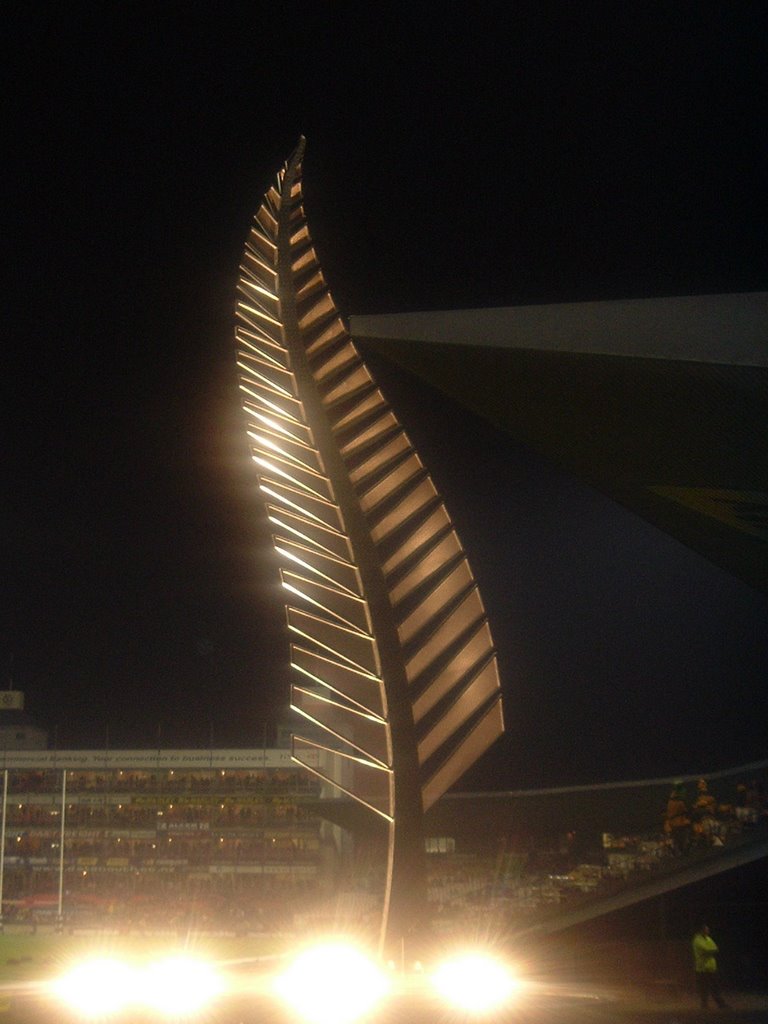
Jade Stadium

One more from the All Blacks game - this was our first view of the field after entering the stadium. Our seats were just on the other side of this Silver Fern (in the second row).

Sunday, July 16, 2006

textin' fool

I know "the kids" are all into back home, but before I arrived in New Zealand I never sent text messages (of course, I was rather behind the curve on cell phones as a whole, but we'll ignore that. I'm still ambivalent about cell phones in theory, but in practice I've given over my soul).
Never had to. Coming here has given me an idea of just how cheap US cell phones can be (and just how expensive all communications are in New Zealand).
There are no "free nights and weekends" plans here. What there is, at least unless you're interested in a two-year contract, is 59 cents a minute for all domestic calls - Unless you're calling a cell phone from a different provider, then it's even more. It's even the same 59 cents a minute to call the States, the UK and several other countries.
Texts, on the other hand, are 20 cents each and free on weekends. So that's how you communicate.
There's something to be said for the option - it's much easier to coordinate meeting somewhere (such as a restaurant) since you don't have to worry about talking over the noise of people around you, or disturbing those around you with your talking.
I haven't, however, started to use text slang. Nor have I gotten as proficient with the texting as people here who grew up on it - I had a roommate when I first got to New Zealand who could type two messages on two different phones at the same time, with one phone in each hand.


[As an aside, I just wanted to mention how screwed up NZ's phone charges are in another way: I bought a calling card. Using the card, it costs just 3 cents a minute to call the US, dialing a local number to connect (obviously more if I have to use a pay phone.) However, it costs 5 cents a minute to call long-distance within New Zealand. Tell me how this makes sense.]

Friday, July 14, 2006

the rugby

I'm still not feeling well, so I'll hopefully post up more on this soon but I wanted to get a quick comment up on watching the All Blacks:

- Seeing the haka live was incredible.

- The weather couldn't have been better, and our seats were in the second row just in front of one of the goal lines - there were two trys (scores) which happened in our corner, less than 50 feet away.

- The atmosphere was one of the strangest I've ever been a part of. The crowd filing into the stadium before the game had a little buzz of excitement and anticipation you get before games people are interested in, but less than I would have expected.
It was even odder once the game started - for about the first 10 minutes, the stadium was dead quiet. There were about 35,000 people in the 37,000-seat stadium, but there was no rustling, no murmurs. There were cheers and applause at the right moments, like a change of possession or big hit, but then the silence would return. We could literally hear the players grunt from across the field. It felt more like a theater crowd. I couldn't quite figure it out, but after New Zealand went ahead by a couple scores the crowd definitely relaxed, and you started to hear more of a background noise, with people shouting encouragement or derision. I started talking with an older guy sitting next to me, who had obviously seen a lot of New Zealand rugby. His explanation was the crowd was nervous, worried at the start Australia might win.
It's a slightly different approach than most crowds in the States. In the year I've been in New Zealand, the All Blacks haven't lost a match, but the tone of coverage is always "well, yes, they won but...": the stars didn't play as well as expected, a segment of the game didn't look polished, a player is injured, the lineup still isn't settled. Something.

You get that in the States, too. But I think the approach in the States is "we expect our team to win, and if it doesn't, or look like it might lose at some point in the future, we're angry about it."
The approach here seems more like "we're happy our team is winning and we know it's one of the best in the world, but I just don't know if they can keep this up. There - see that? I told you we couldn't keep it up. I knew we couldn't really be that good this year."

so what's a haka?

I mentioned the haka when talking about the All Blacks game. Just to let people know just what I'm talking about:

The haka is performed by the All Blacks before each match. The word haka generally refers to any Maori dance (New Zealand's indegenous people). The All Blacks' haka, at least, is more of a chant with a few body gestures for emphasis.

The haka the All Blacks perform before each match (or the one they used to always perform - in the last two years they've started to introduce a new haka which was written specifically for the team) is called Ka Mate. New Zealand's rugby teams have performed the haka before matches since the late 1800s.

It's performed just after the national anthems and immediately before the opening kickoff. It's one of the most intimidating and stirring sights I've witnessed at a sporting event - the crowd goes silent, the players' chants (and thumps - part of the haka is beating the hand against the thigh or chest, which adds to the noise) are pumped through the stadium loudspeakers and for a moment, everyone watches.

Not everyone is as impressed, however. We were talking with a Scottish gentleman this evening who believes the haka should be banned from rugby stadiums.

"They shouldn't waste all that bloody time practicing a ballet," he said.

To which I replied, they must be good if they can whip Scotland while wasting all that time on the ballet.

Wednesday, July 12, 2006

damn the luck

I was going to write several blog entries yesterday, as I had a few
hours set aside to update you on the goings-on and happenings in
Dunedin and New Zealand.
Let you know about things like waking up every morning for the past
few weeks to sheets of black ice or a white blanket of frost on the
roads (which, since we're staying at the top of a hill, makes walking
interesting). Like how since we headed up to Christchurch this
weekend (for an outstanding experience watching rugby) the weather
has been extremely nice, with temperatures around 45-50 even at night.

But now that the weather's nice, my body decided to go ahead and get
sick anyway. So I had no energy to update (or do anything else on my
list, which is fairly lengthy as we have just a couple more days in
Dunedin before packing up and doing a bit of a South Island road
trip, one which hopefully will include skiing).
Hopefully I'll get some entries up this weekend (or sooner).

Thursday, July 06, 2006

Photo update


Lanterns
Originally uploaded by slack13.
I've also put a few new photos up on my Flickr page, including a number of photos from a Mid-Winter Carnival they held here in Dunedin a couple of weekends ago. The highlight of the festival was a procession of lanterns (to chase away the longest night). People could make their own in the weeks preceding the festival, then parade along with several larger lanterns in all shapes. The night was capped off by fireworks.

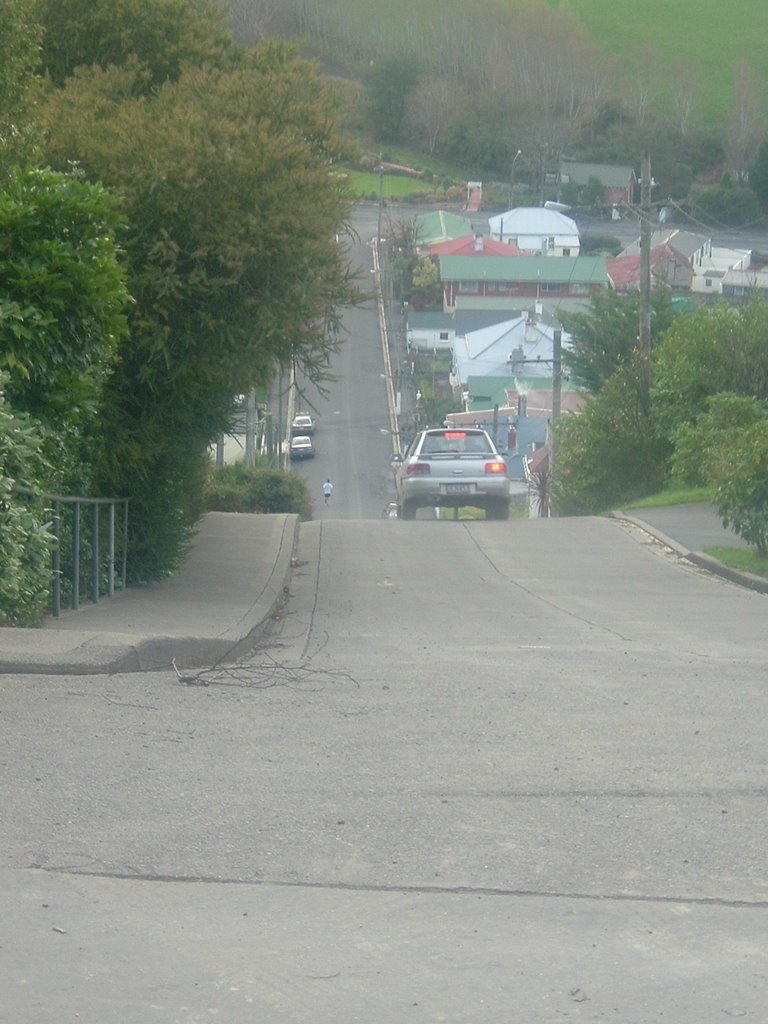
Someone else's view from the bottom

Since I didn't take a photo from this angle...

getting my travel photos up to you


I haven't been very good about putting up photos lately, so I'll try to remedy that in the next couple of weeks.

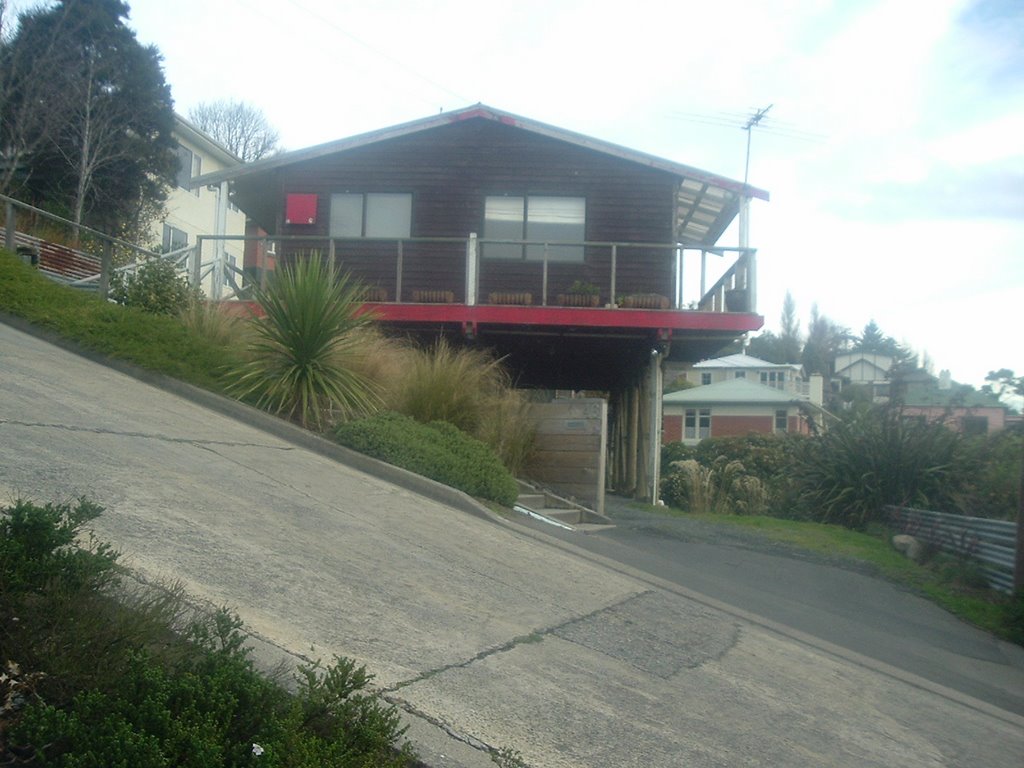
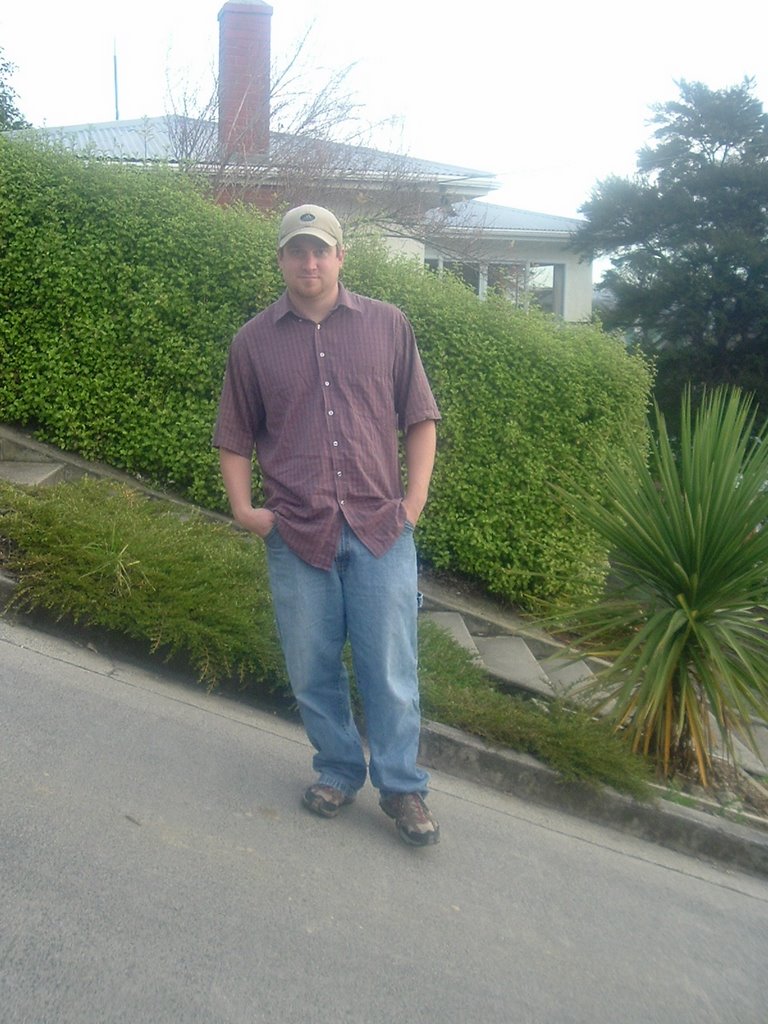
I will give you a few now - these are from our trip to the World's Steepest Street (apparently it's in the Guiness Book of Records, but I've never actually checked) across town.

We walked up the street - then back down. Apparently it's about a 1:1.26 gradient, which means it's damn near at a 45-degree angle. All I know is that it's a steep walk. And it seems crazy to me the number of driveways with cars in them just off the street - that's a hell of an end to the daily commute.


and hopefully they'll be staying...

Sometimes I forget how rare it was back in the States to meet people from another country who were just traveling around. Here, especially when you're traveling yourself and are on the tourist circuit, you meet almost no one else.

Today, I stopped by the city library. A girl was applying for a library card. I overheard the woman behind the desk tell her:

"You have to put down the contact information of someone who knows you. And they have to be in this country."

Wednesday, July 05, 2006

the rugby

We haven't done a lot in terms of cultural travel the last few weeks.
We've mostly been hunkered down working (temp jobs) in Dunedin to try
and put a bit of cash in our bank account before we start to travel
and drain it all.
This weekend, however, we have an activity planned that I've been
looking forward to since we arrived in New Zealand.
We're going to see the All Blacks. The haka. Rugby, New Zealand vs.
Australia, in Christchurch.

Tuesday, July 04, 2006

coming up

Our time in New Zealand is almost drawing to a close.
We're working for two more weeks in Dunedin, then packing up and heading to the ski fields before taking the hard steps: packing for the next few months of travel, sorting the things we don't need for sending home, selling the car.
We came here with a relatively heavy suitcase and a backpack each. Considering we were coming for a year, it wasn't an outlandish amount of stuff, but there were some clothes packed we never needed.
Now we face an even tougher packing job. Since we're not flying directly back to the States, we can't drag as much with us. In another instance of the States supersize culture and the willingness of companies to accommodate it since we mean so much money, flying to or from the States gets you more than double the luggage allowance than flying anywhere else. So we have to cut our two heavy bags down to one bag of less than 20 kilos each.
The process has already started. We mailed a some clothes home and gave some away when we left Wellington to come to Dunedin, and I left my (older and battered) suitcase in the donations pile.
We've still got a long way to go, however. The bags we still have with us have disgorged enough contents to fill our room in the hostel. We'll also have to somehow pack for summer and winter conditions over the next four months.

We'll leave New Zealand the first week of August for nearly a month in Australia. Early in September we'll fly north to Bangkok and spend two or three weeks in Southeast Asia before flying to Beijing.
A couple weeks in China and then we head to Europe. We plan on spending time in Germany (hopefully seeing our former flatmates) and several areas of the UK and Ireland, trying to stay with friends we've met here and elsewhere.
Then back to the States in late November or early December. And then I have no idea.

Monday, June 26, 2006

now I'm saying it

It is the most uniquely Kiwi piece of slang there is: "Sweet as."
(When you first arrive in this country, you hear an extra "s" on the end of the phrase).

It's used the same way I used "no problem," or "that's cool" or even just "sweet."
It can be used as a descriptive expression: "That skydive was sweet as!"
or as a statement to express a laid-back contentment: "Sweet as, bro."

There's never any indication of what it might be as sweet as, of course. The construction can also be used with just about any adjective, usually to express how intense something was.
"Yesterday it was cold as, man"
"Last night I was drunk as"
"That guy is crazy as, bro"
"Your coffee is bitter as"

Mostly, however, the "as" only goes with "sweet." And once you get used to the expression, it's quite handy.
It's sweet as.

Friday, June 23, 2006

it was moderately entertaining

When we were traveling around the North Island we picked up a brochure for a private Elvis museum - basically a guy obsessed with Elvis letting you pay to see the collection of stuff in his basement.
The funniest part of the whole thing, however, was a list of television programs that have featured the collection.

No. 1 on the list: a show with the not-quite-enthusiastic title, "That's Fairly Interesting."

Apparently this was a New Zealand-produced show some years ago. It's a good illustration of a certain bit of the Kiwi character, a knack for understatement and a fear of appearing too proud. After all, you wouldn't want to advertise something as being can't miss and disappointing your audience. Better to be safe and underwhelm.
For someone used to American hyperbole, the title amuses me every time. I am just picturing a old gentleman of the English type coming on my TV screen on Sunday afternoon, introducing a piece on a local attraction, then after the piece airs coming back on, and in a slightly hopeful tone of voice, suggesting he regrets taking up your time and hopes you don't blame him, saying,
"Well, That's Fairly Interesting."

world cup fun

One of my favorite moments as a sports spectator came four years ago in a New Orleans Irish bar filled with Brazilians.
It was the final game of the 2002 World Cup, between Germany and Brazil. The game was being played in Japan or South Korea (I don't remember which country hosted the title game) and so kicked off at 5 a.m. New Orleans time.
My buddy Wright and I started the night before, with the goal of ended up in the Quarter at a bar we were told had been adopted by the local Brazilian community for the tournament.
We showed up an hour before game time, and the bar was nearly empty. But in the next half hour or so, every square foot in the bar was packed and everyone was rooting for Brazil.
Fans hung flags and banners, chanted throughout the game and there was even an air horn among the crowd.
It was all of the best aspects of watching sports: a roomful of strangers turned into best friends, united in every Brazil attack, euphoric at each Brazil goal. I would have barely cared about the result if I'd watched the game at home, but in the midst of the revelry, I could share in the euphoria of the contest and eventual victory. The fact it all happened between 5 and 7 in the morning just added to the atmosphere of the whole event.

I'm reminded of that World Cup fairly often during this one. Not because I've had any experience similar so far this time around, but simply because the games are once again at an impossible time.
Four years ago, it was impossible to casually watch any of the World Cup, because all the games kicked off sometime between 2 a.m. and 6 a.m.
Four years later, it is impossible to casually watch any of the World Cup, because all the games kick off sometime between 2 a.m. and 6 a.m.
Yes, somehow I've managed to once again end up on the opposite side of the globe from the World's Biggest Sporting Event. It takes dedication to watch sports at times like those. You either have to stay awake until the game finishes or force yourself to wake up at strange times.
Unusually for me, I've actually had more luck waking up at odd hours. Last night, for example, I dragged myself out of bed at 2:45 a.m., after about three hours of sleep, to head out and find a pub showing the US/Ghana game. (The first-round games are only showing on cable, which the hostel doesn't have).
I wandered downtown to my first choice, only to find the bar was only showing Italy playing the Czech Republic. I headed to another pub rumored to be open, to find the US game on a big screen in a back room.
There were about 15 fans watching, most of whom appeared to be displaced Americans (I'd guess most were studying abroad at the University here). I didn't arrive until halftime, however.
There was no opportunity for bonding through sport here. With the States down 2-1 and needing two goals to advance, the mood wasn't celebratory. I watched a mostly desultory half of soccer before heading home for another four hours of sleep.
Regardless, I'm glad I headed out. I feel like I've achieved something each time I say I'm going to watch a game and actually manage to do so. And even when there isn't a celebration, there's something about wandering the deserted early-morning streets, opening the door to a bar open specifically for World Cup fans, and finding a group of people who are just as idiotic as you are to be up at a time rarely seen simply to watch a game of soccer.

(One of the best single moments of watching that game with the Brazilians: There were two constant chants from the crowd. One was easy to pick up: Ole, Ole, Ole, Ole, Bra-zil, Bra-zil.
The other I couldn't make out, After about 30 minutes, I turned to the fan sitting on my right.
"What are you chanting?"
"Oh, that's 'Fuck the Germans,' in Portuguese."
I think that's a phrase that should be in the guidebook for every country. It seems like a sentiment most of the world is united behind.)

Monday, June 19, 2006

lights on the old museum


lights on the old museum
Originally uploaded by slack13.
I just like this photo. It was taken several months ago in Wellington. This is the old museum, which is now part of Massey University. It was also across the street from my old apartment. When King Kong had its New Zealand premiere, this was the site of the cast party, which is why it was lit up like this. We wandered by the night before, when they were setting up the lights.

hills and cold

I've gone from one city built up and down hills to another.
In a few ways Dunedin is like a smaller version of my other New Zealand home, Wellington. Both are nestled between hills and a harbor, both lay claim to a better nightlife and music scene than their size would normally call for. And both have a reputation for leaving something to be desired in the weather department: Wellington for wind and Dunedin for cold.
I realized the other day I'm almost exactly as far away from the equator as I was growing up in Montana. Dunedin lies at 46 degrees South. Geraldine, Montana, is 47.6 degrees North.
Since I'm about 1,000 miles closer to an ocean here in Dunedin, it doesn't get quite as bitterly cold here. But after four years of living in Mississippi all the natural antifreeze built up by my upbringing has left my blood, so the near-freezing temperatures here are testing my body's ability to cope. Fortunately, the hostel has wood fireplaces so I can blast heat into a room without having to curse the Kiwi lack of central heating.
Unfortunately, the hostel sits at the top of the hill overlooking downtown. I've had to trudge up and down (it feels like mostly up) more hills here than I usually did in Wellington, since we lived in the relatively flat central city. If we choose to take the elevation on all at once, the sidewalk at the end of the street turns into a staircase with 169 steps, which leads to another set of about 30 steps. Otherwise, we just walk up a constant grade to get to the same place.
On the plus side, the city really does seem like a fun place to go out in, when I get up the motivation to brave the stairs.

Tuesday, June 13, 2006

driving oddities

We may not have had a car for most of our time in New Zealand, but we have been subject to some of the oddities of New Zealand's roads from the beginning. Road trips in rentals or other people's cars, and now our own, clued us in.
There were a number of strange rules and regulations to get used to: obviously, driving on the left was the biggest one. Also mandatory stops at pedestrian crossings on the highways as well as city streets.
The strangest rule is one unique to New Zealand, at least according to the guidebooks. If two cars facing each other at an intersection are both turning the same direction, the one turning right has the right-of-way.
For those used to driving on the correct side of the road, picture this: You're at a red stoplight ready to turn right (in New Zealand you can't make those easy turns, which are left turns here, against a red light. Ever.). Another car, facing you, has it's blinker on to turn left. You're both going to turn into the same lane. So, obviously, you have the right of way. Right?
That's not how it works here.

Another oddity is just how well people follow directions. Those pedestrian crossings, for example. In theory, crosswalks in the States work the same way. But rare are the cars who stop at them, especially on a busy street (when you can find a crosswalk on a busy street). Here, the crossings are everywhere, and everyone stops.
Kiwis also have a propensity to have a two-lane road turn into one lane immediately after an intersection. If there's much traffic in both lanes, as there often is, drivers are expected to effortlessly complete the transition by alternating cars from each lane. Traffic signs urge you to "merge like a zipper."
Amazingly, everyone does.

Tuesday, June 06, 2006

touring along

This was the weekend of the afternoon drives.
Dunedin is situated at the end of a long, narrow harbor formed by the jutting thumb of the similarly long and narrow Otago Peninsula. This weekend we explored both sides of the harbor; on Saturday we drove out to the end of the Peninsula, and on Sunday we drove along the mainland side to the harbor entrance.
Then on Monday, which was a national holiday here as New Zealand celebrated the Queen's Birthday (which was actually in April - don't ask me), we drove further north up the coast and then west into the rural mountain landscape.
By the time we took off Monday, Kirsten remarked she felt like an old couple going out for a Sunday drive. I figured since it was actually Monday, we were all right.
Saturday was a day for animal-spotting (and the only day we paid to be tourists). At the end of Otago Peninsula is an Albatross breeding ground, the only one in the world that's not on a remote, inaccessible Sub-Antarctic Island. This is where the payment bit comes in - you can only see the nesting area on a guided tour.
We'd been here once before. On Christmas Day we drove out to the end of the Peninsula in driving raid and a cold wind, and caught a glimpse of the albatross loving life and gliding through the air. The worse the weather is, the better if you're an albatross, apparently.
This time around, we were told it was unlikely we would see any adult birds, as they no longer are feeding the chicks more than once every few days. This is because the chicks have been fed so much in their first few months of life they're now fat bastards, weighing more than their parents. They're still covered in down and haven't grown their real feathers, so they don't fly, barely move and are now on a diet.
We got lucky. As we walked into the observation shed, we saw an adult standing next to the one visible chick (which really was just a fat ball of white fluff, at least as big as the adult). It was there just a minute or two, before taking off and flying out of sight.
It wasn't the end of our wildlife viewing, however. Next to the parking lot for the albatross center is a small beach. After sunset, a number of Blue Penguins, the world's smallest penguins, came ashore. There was just one small problem: it was a dark moonless night, and it kept getting darker. We could just make out the first penguins, which were only about a foot and a half tall, but after that all you could see was the blue flash of the later arrivals' bellies. We did get to hear the penguins after we could no longer see them.
Sunday was originally going to be for finding some walks along the coast, but a bitterly cold wind started to blow, bringing with it occasional rain, so we were content to stay in the car.
Sunday night Dunedin picked up some hail with it's rain, and when we woke up there was actually a dusting of snow on the hills around the city.
Our Monday Sunday drive led us up to the Moeraki Boulders, a group of perfectly round rocks, about four feet across, lying in the sand. They are impressive on first glance, then they become just a group of big rocks on the beach. We headed back to Dunedin on a scenic route into the hills, passing a huge open pit gold mine as well as the ruins of settlements from a late 1800's gold rush in the area.
Sure, we didn't get out of the car much. But we saw quite a bit of the area, and after all, it was cold.

island life

New Zealand is a Pacific Island nation. New Zealand is not a tropical island nation, although it sometimes pretends it is.
This might be something visitors fall prey to more than native Kiwis. To an American, New Zealand looks like it belongs with Fiji, Samoa and all the rest sitting all the way across the blue expanse of the Pacific. At the very least, New Zealand is lumped in with Australia in our geographic mind.
It's easy to overlook the fact New Zealand's Southland is nearly as far away from the equator as Canada.
New Zealand is not a tropical island, but there is a small bit of the easy-going island mentality here. Sometimes the mentality is here defying all logic.
This was the case the other day here in Dunedin. Mind you, there was a dustin of snow here yesterday. Temperatures have been around and below the freezing point. But there he was, hanging on to the island ideal, a New Zealander to the core, pulling on a winter coat, bracing against the bitter wind...
And wearing flip-flops.

Thursday, June 01, 2006

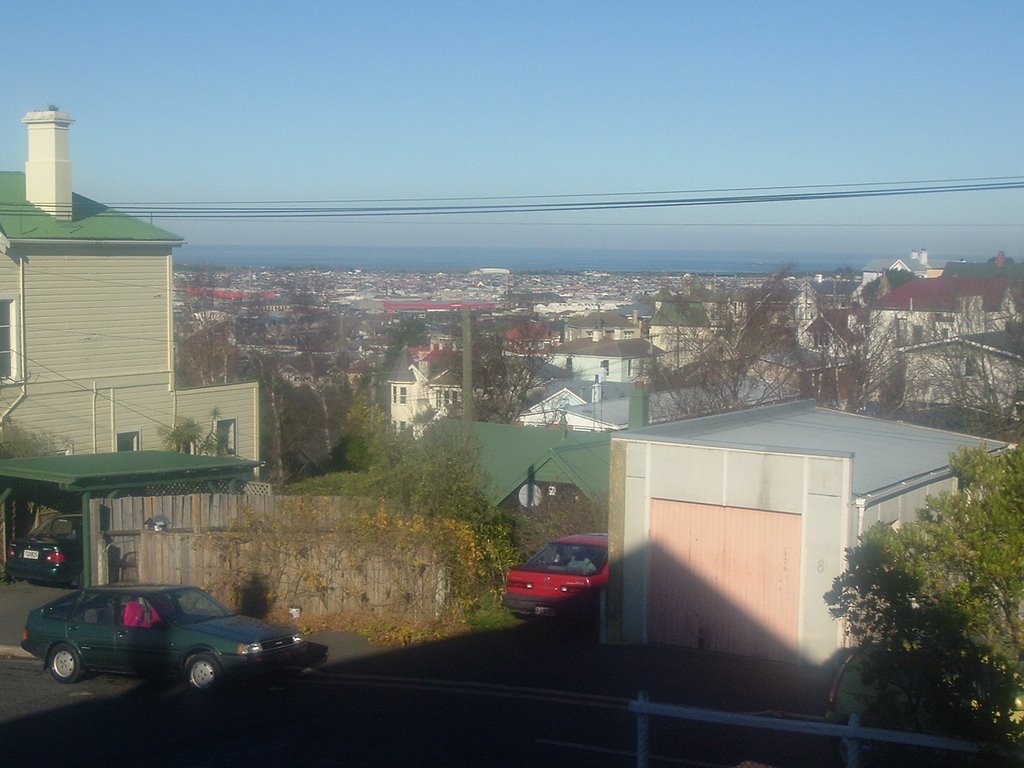
dunedin view

This is the view from our hostel, which is located on a hill above the city center. Looking from the front door, you look over the city to the Pacific Ocean. If you turned left, you'd look toward downtown and the harbour, which is sheltered from the ocean by a long, narrow peninsula.

Tuesday, May 30, 2006

more pics

They are overdue, I suppose - photos from our trip around the North Island in April and early May:


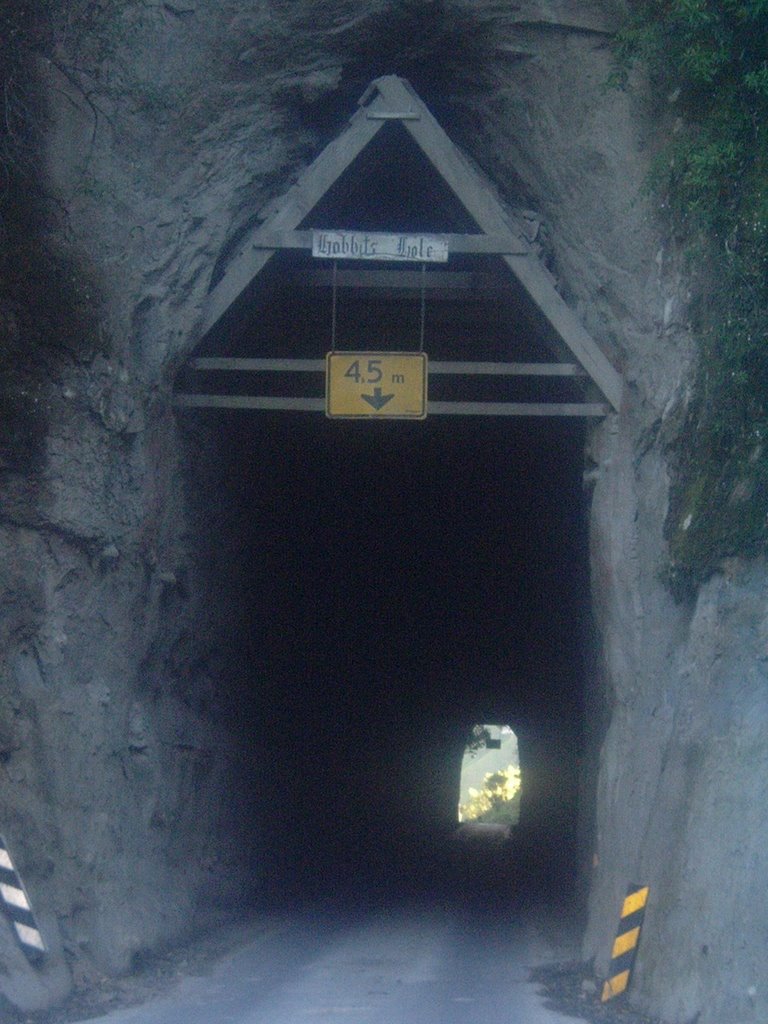
A tunnel at the beginning of a long side trip we took on a gravel road through the mountins off the "Forgotten Road Highway" heading east from Mt. Taranaki. The one-lane tunnel is nicknamed "The Hobbit Hole."


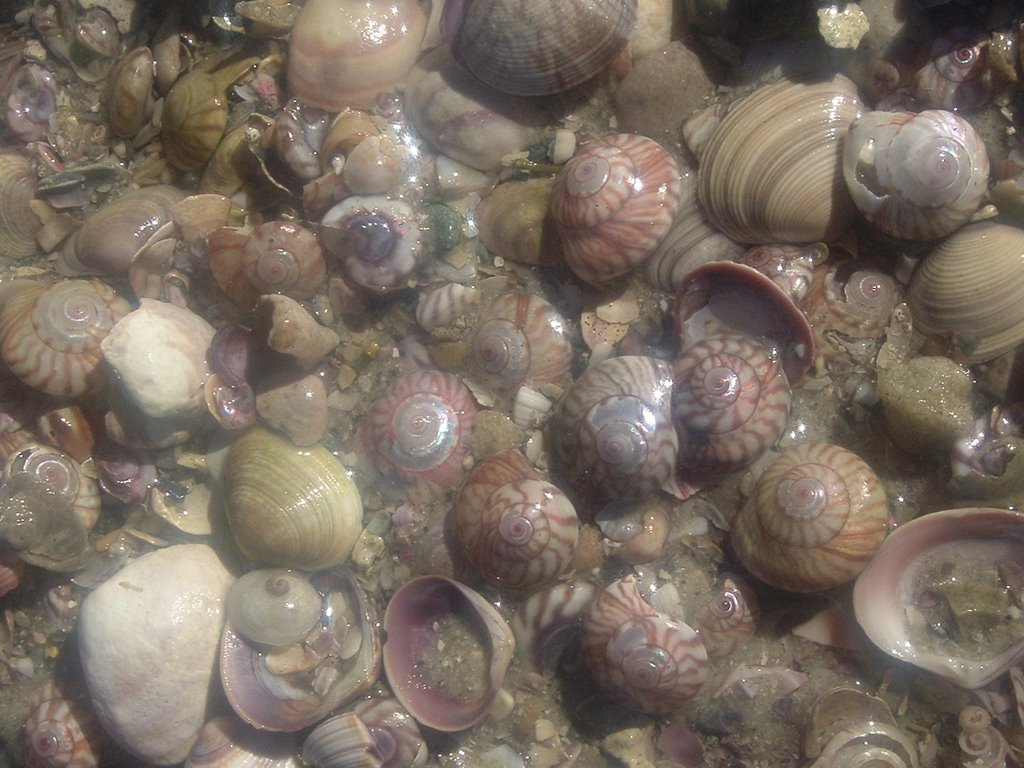
Shells on a northern beach.


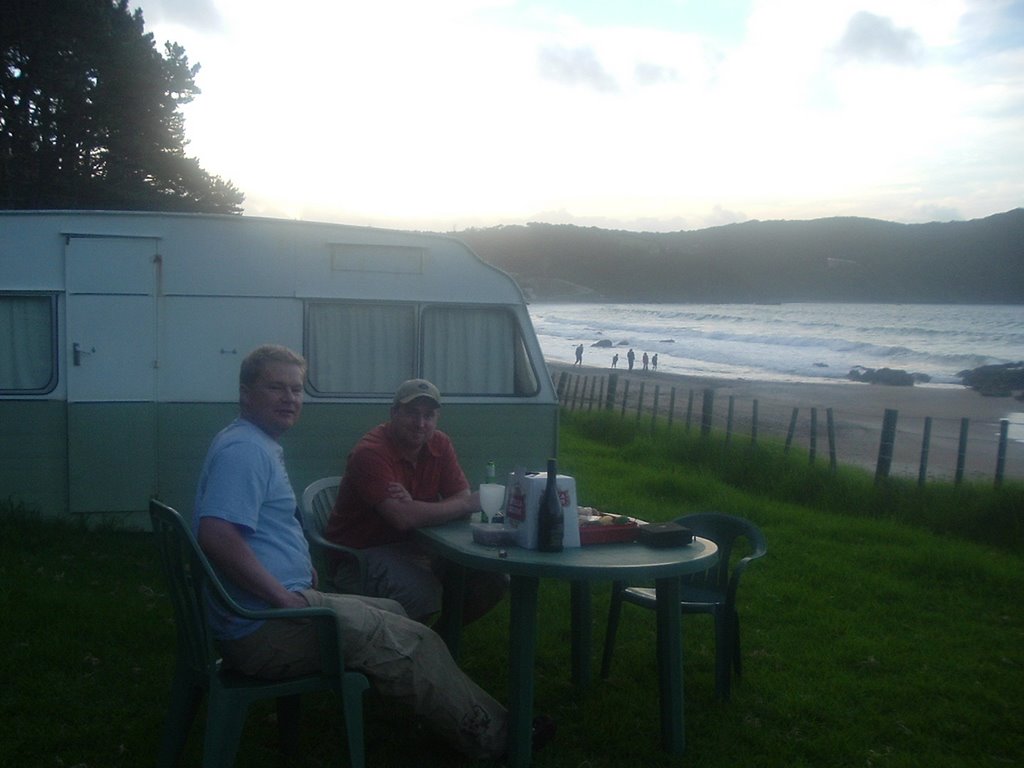
Our friend Andrew and the beach where he put us up.


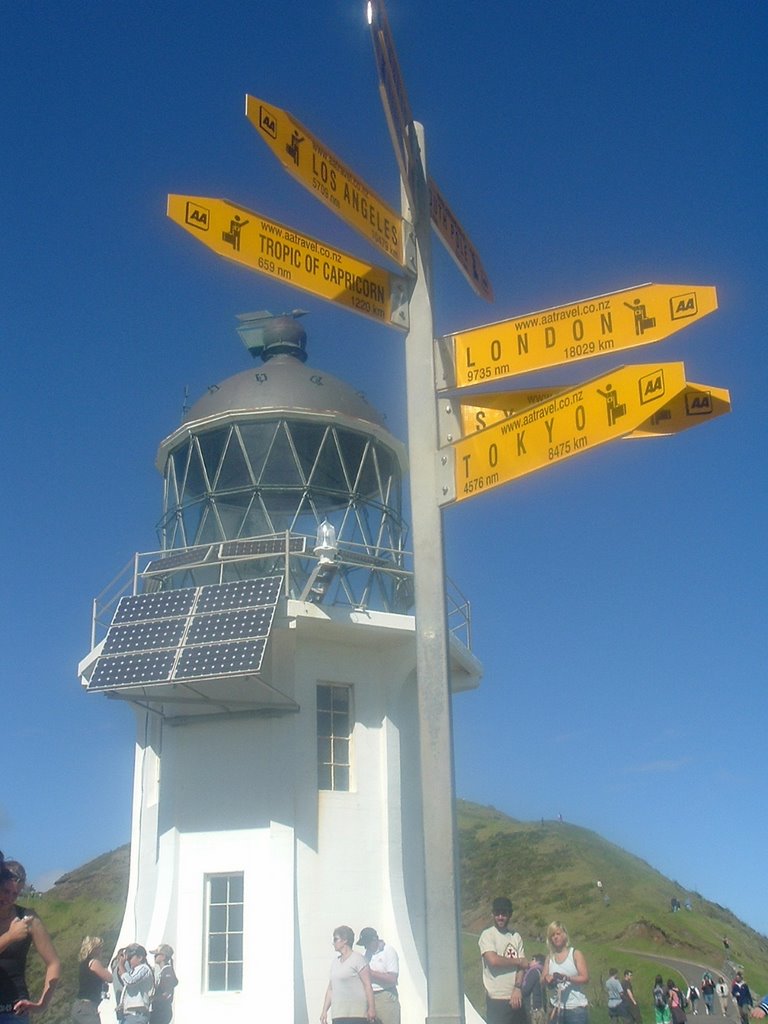
The lighthouse at Cape Reinga, top of the North Island.


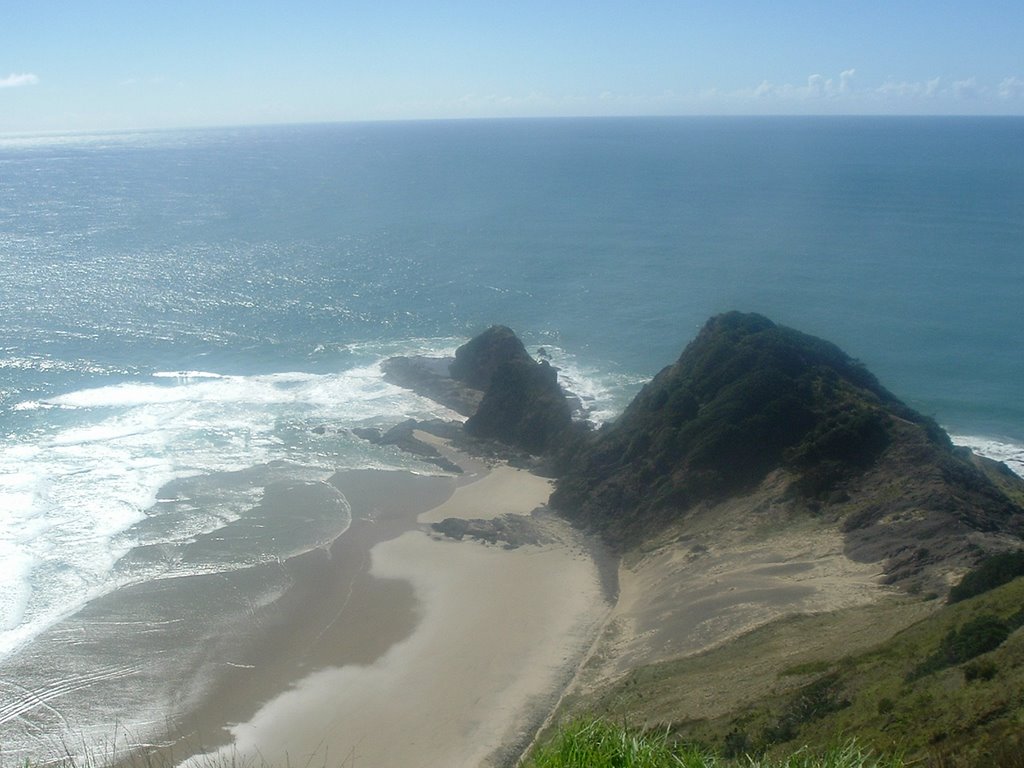
The tip of New Zealand.


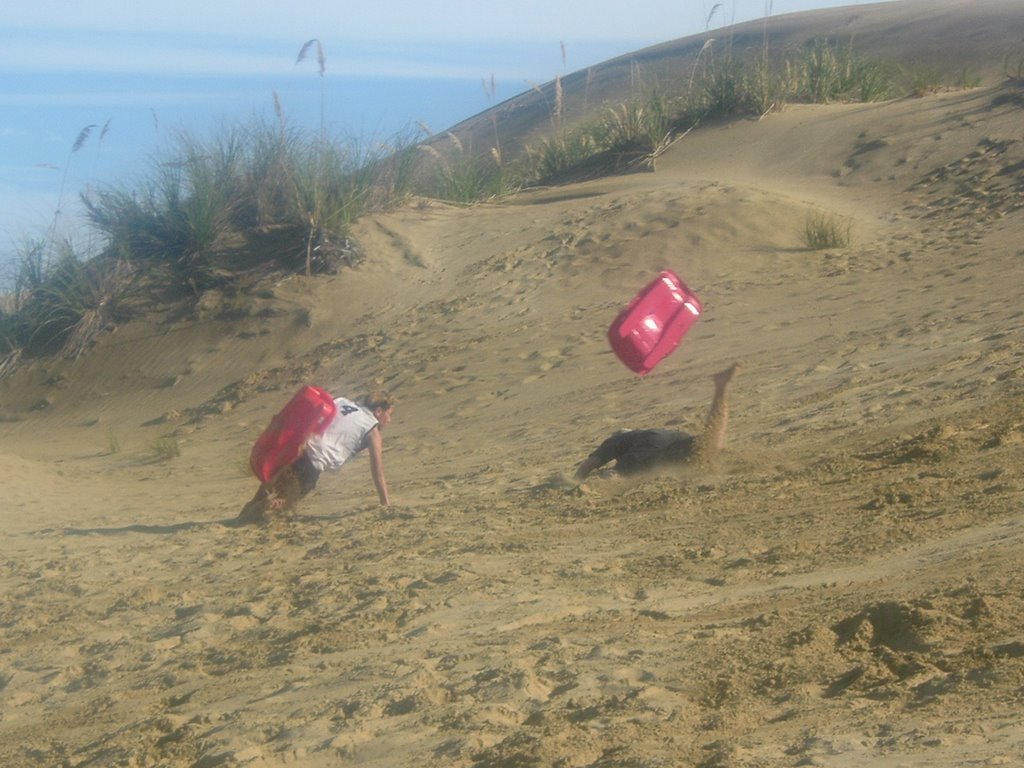
I'm the one facedown after trying to sled down a giant sand dune on the 90-mile beach, a long beach (but not actually 90 miles long) running down the west coast of the northern tip of New Zealand. As you'll see later, the beach also serves as a highway with it's hard-packed sand.


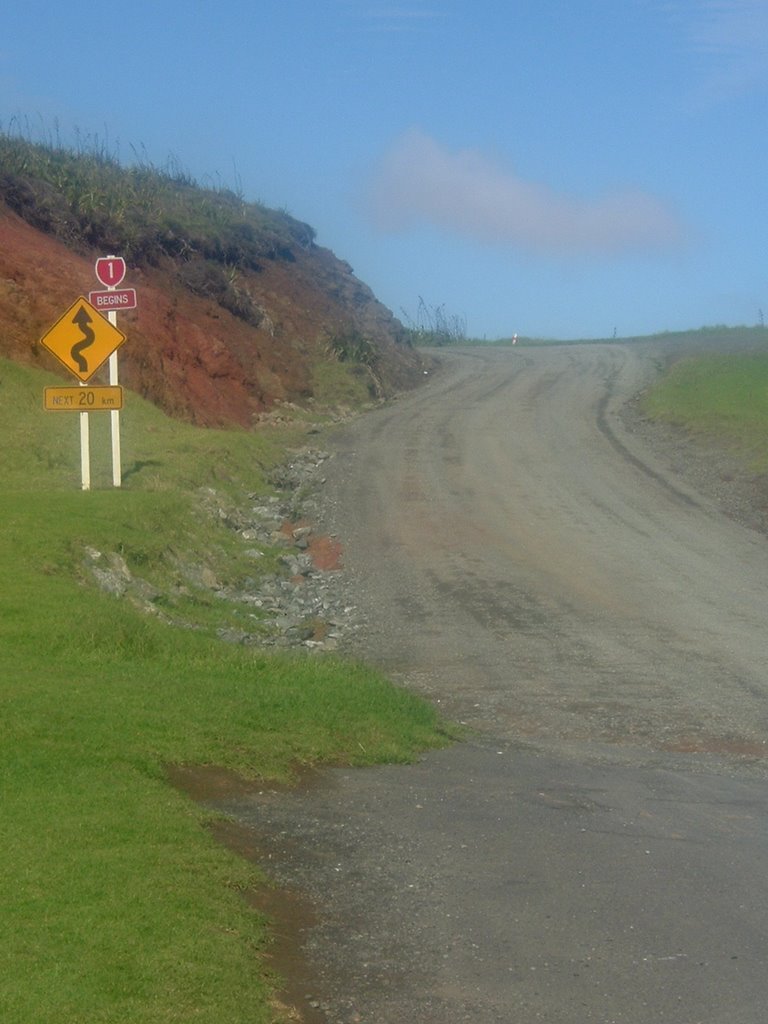
This is the start of New Zealand's State Highway 1, the main artery of the country. For the first 20 kilometers, it's a gravel road.


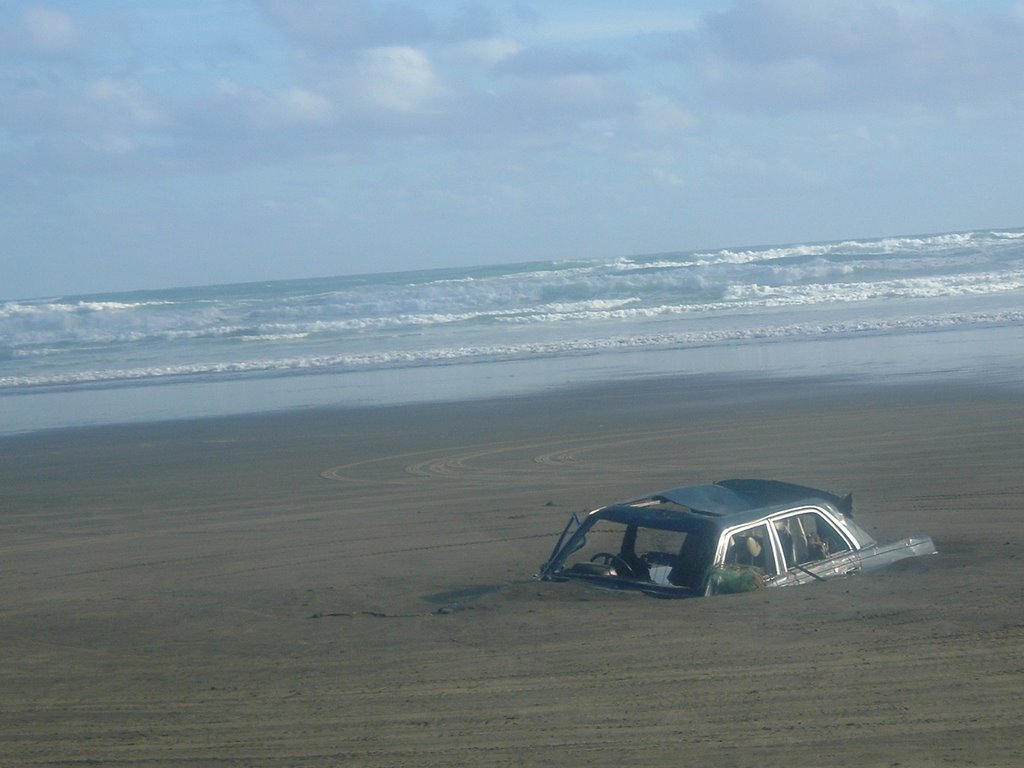
Someone who tried to use the 90-mile beach as a road and didn't quite make it all the way. Supposedly this car had only been on the beach for about six weeks. However, every day buses go up and down the beach (this photo was taken from a bus window). The secret is to know the tide times and not get caught in the water.


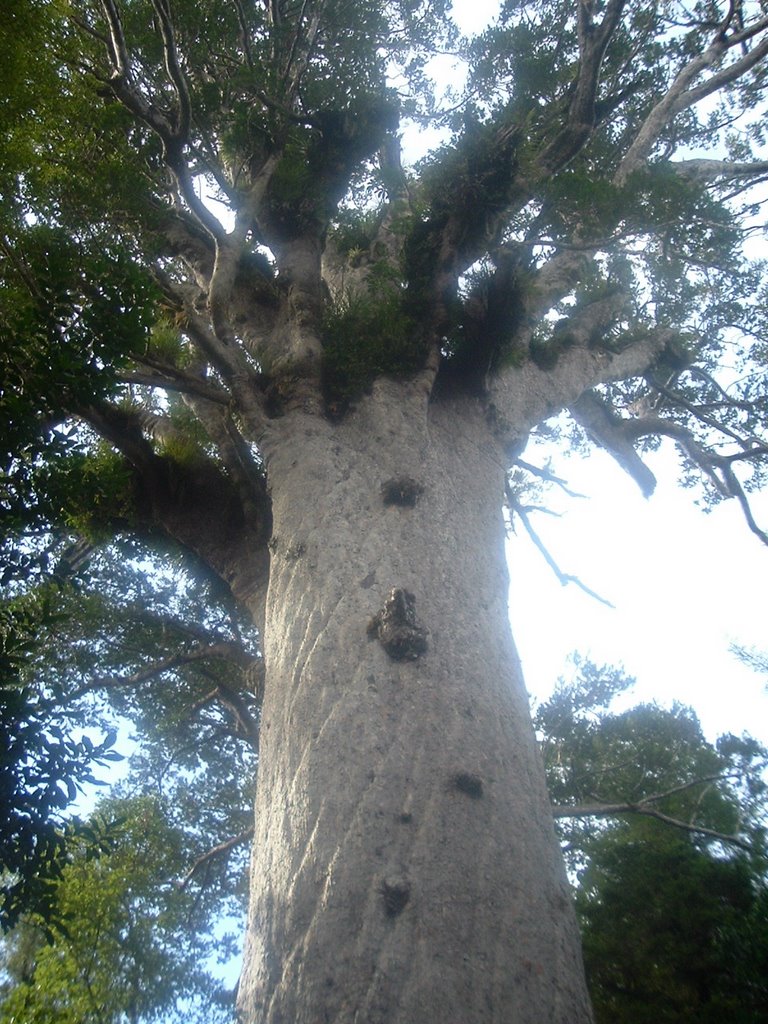
Tane Mahuta, the largest Kauri tree in New Zealand. It's similar in size to the California Redwoods, although not quite as tall.


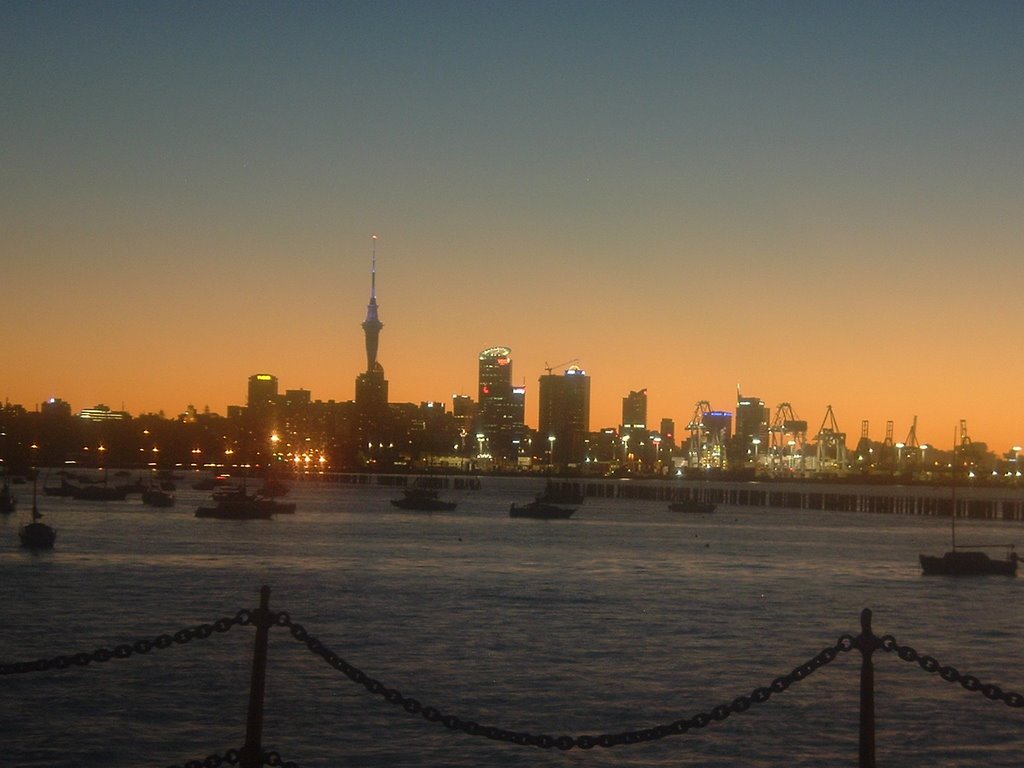
The Auckland skyline at dusk.

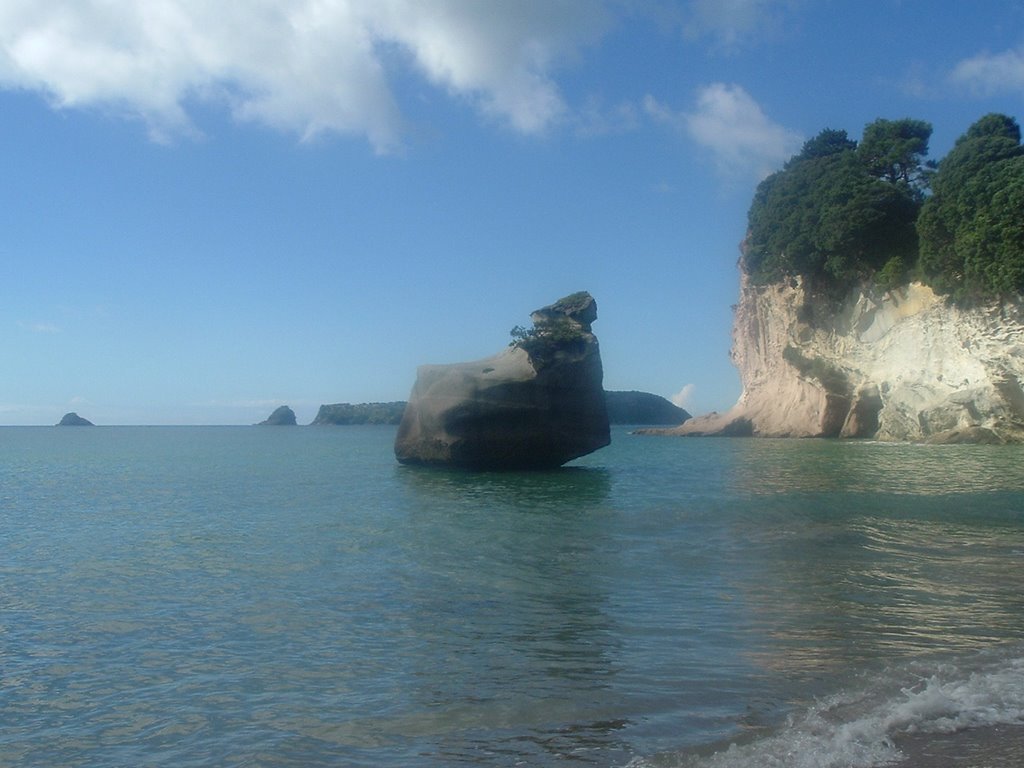
Cathedral Cove.

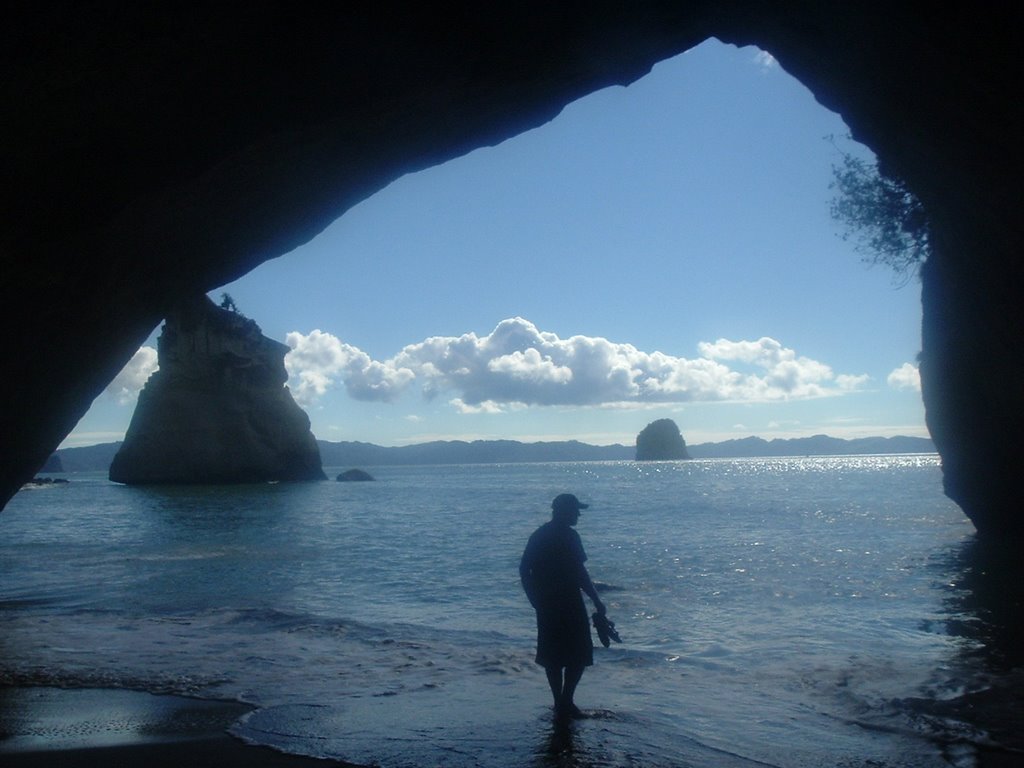
Me at Cathedral Cove, on the east side of the Coromandel Peninsula on the North Island. This was our last day of the road trip. The beach, one that we'd seen many times before in tourism photos without realizing where it was, is secluded at the end of a 45-minute walk. That day was warm - people were wearing swimsuits and bikinis. Two days later we were in Wellington, where we couldn't go out without coats.

Thursday, May 25, 2006

a new point

We're gone from North to South. Left Wellington, packed even more stuff into the car, got on the ferry, and drove most of the way down the east coast of the South Island, stopping in Dunedin.
Dunedin seems a nice enough place - it's New Zealand's version of a college town. About 100,000 population along with 20,000 Otago University students. We haven't had a chance to see if those students actually give the town any life; since arriving on Tuesday we've mostly been holed up in bed trying to shake colds which have plagued us for a week now. We're also doing a bit of cleaning in exchange for free beds at a hostel. That's the reason we ended up in Dunedin: we didn't have any real idea on where to go, and this was where we found free accommodation.
What I can tell, however, is it's an interesting city visually. It was founded by Scottish settlers in the 1800s, and there are plenty of big, imposing, European stone buildings around town. It's also built on shoreline hills - Dunedin claims the world's steepest street (which I haven't seen yet). And outside of town is the large Otago peninsula, home to the world's only mainland Albatross colony (if you consider New Zealand a mainland) as well as two kinds of penguin, one the world's rarest, sea lions, seals, and all sorts of other things to look at.
It's not the first time we've passed through this town. Dunedin is actually where we spent Christmas. Five months ago, the town was cold, grey, and our car broke down. Now it's cold but sunny, and our car is working so far.
(knock on wood)

talking about Wellington

Now that I've left Wellington, I figure I may as well tell you a little about the city I spent more than half a year in.
This is a story I wrote intending to sell to a paper, but haven't yet:

WELLINGTON, NEW ZEALAND -- This is a small city, by the measure of nearly any country in the world.
But Wellington has an atmosphere, culture and nightlife that belie it’s size.
New Zealand’s capital boasts only 150,000 people, and barely 400,000 people in the region. The country’s second-largest urban center and capital looks and feels bigger. It is this character, Wellington’s ability to at once feel larger and smaller than it truly is, that the compact city’s residents often extoll.
On the one hand, Wellingtonians constantly have options in theater, live music, restaurants, cafes and live music. New Zealand’s capital is also it’s cultural capital.
It’s the home of theater companies, art-house cinemas, live music venues, art galleries and the country’s national museum. There are concerts, ranging from local punks bands to the national symphony, every night of the week. The town hosts the country’s International Arts Festival and has a smaller film or music festival seemingly every other weekend throughout the year.
Peter Jackson has given Wellington some international attention as the home base for the director of King Kong and the Lord of the Rings trilogy.
Tourists can stroll the pedestrian mall of Cuba Street and its independent, funky shops and cafes, or the upscale shops of downtown’s Lambton Quay. The nightlife options are just as broad, with people heading to Cuba and Courtenay Place for the various clubs and pubs on offer. The city also has a extensive public transportation system allowing people to get wherever they need to go.
On the other hand, Wellingtonians often talk about just how small the city is in social terms. Walking around the city or going to a show you’re likely to run into someone you know.
Just having a car breakdown can be occasion for a reunion. Nor Jimenez, who has lived in Wellington for 25 years, walked along the city’s waterfront recently instead of driving. He said he ran into friends -- some who he hadn’t seen in years -- every few blocks.
---
Wellington sits at the southern end of New Zealand’s North Island. It is the departure point for the ferries which cross the Cook Straight, taking people, cars and freight to the South Island.
It occupies a small, curving strip of land resembling a wide, double-barbed fishhook. The downtown sits on the northern, inside curve of the fishhook, looking out at the sheltered bay and harbor. The residential neighborhoods and suburbs cover the rest of the hook, hemmed in by the waters of Cook Straight to the south, and the narrow waterway which forms the link between the straight and harbor to the east.
Like San Francisco, the land rapidly rises up out of the water. The city center is wedged into a narrow space between waterfront and the hills. Much of the land the skyline rests on was reclaimed from the bay.
A little further out, the residential neighborhoods have used the hillsides and hilltops.
“When I explain Wellington to people, I say it’s like a giant stood with one foot in Evans Bay and one foot in Cook Strait and sprinkled Monopoly houses on the hills,” says Kit O’Connor.
O’Connor grew up in Gisborne, further up the west side of the North Island. She now lives in Wellington, working with the national museum, Te Papa. From her home, she looks out on the sea, with one of Wellington’s ubiquitous hills rising up behind.
Long, steep hills ring most of the city’s downtown, often capped with low-slung buildings. However, the hills haven’t simply been developed with a carpet of buildings set in concrete. Instead, the eye is drawn to individual homes and buildings, separated by thick bands of wild greenery.
Houses co-exist with the trees, leaving the impression the buildings have sprouted up like the rest of the vegetation.
“They just hover on top,” says O’Connor.
But even in the central city, prime hill-top real estate has been left largely undeveloped. Wellington’s town belt, a series of hilltop parks criss-crossed by walking paths, stretches south from the harbor and downtown across the thin strip of land to the open sea.
Back downtown, nearly every block sports at least one restaurant, bar or cafe. Wellington likes to brag it has more cafes per capita than just about anywhere, and it may be true.
Most of the cafes, as well as the bars and other food and drink venues, are on Cuba Street and Courtenay Place.
Cuba is the home of more live music venues and independent-minded shops. It’s the home of the black-clad-and-pierced crowd. Courtenay Place is home to more dance clubs, chain restaurants and is populated more by the professional, dress-shirt-and-slacks crowd, although the crowds and character overlap between the two areas.
On either street you’ll find crowds in the coffee shops and cafes during the day, hanging out at coffee hotspots such as Fidel’s on Cuba or Expressoholic on Courtenay. By night, the streets are home to the crowds heading to or from the city’s nightspots.
For those more active during the day, Wellington has Te Papa, the country’s national museum, a cable car running from the downtown business district to an extensive botanic garden and a waterfront ready for a stroll.
Balancing the city’s charms is its weather.
Natives tend to say on a nice day Wellington can compete with any city in the world. The problem is the relative rarity of nice days.
Ocean winds stopped by the islands of New Zealand squeeze through Cook Straight, keeping Wellington well-ventilated. The town’s nickname is Windy Welly, and most days it lives up to the nickname. The town’s geography keeps temperatures cooler than the surrounding areas, and it also seems to be more prone to cloudy days than other New Zealand towns.
---
New Zealanders seem to regard Auckland, the country’s largest city, something like Americans regard L.A. It’s a big, sprawling city. It’s hard to get around, hard to meet people.
Wellington, then, becomes the closest thing New Zealand has to San Francisco. A city built on hills around a bay, boasting a vibrant cafe and nightlife scene, compact downtown and easy-to-navigate public transport system.
I was discussing the difference between the two major New Zealand cities with Jim, a tourist from Santa Barbara stopping in Wellington for a couple of nights on his way to the South Island. We were at the Matterhorn, one of Wellington’s many bars catering to the trendy, 25-to-35 professional crowd.
A bartender overheard us. He had worked in Auckland for several years and decided to move to Wellington.
“Wellington is just more open, more friendly,” he said. “It’s easy to talk to people here.”
And once you talk with them, you’re likely to run into them all over the city.

Wednesday, May 24, 2006

big kiwi

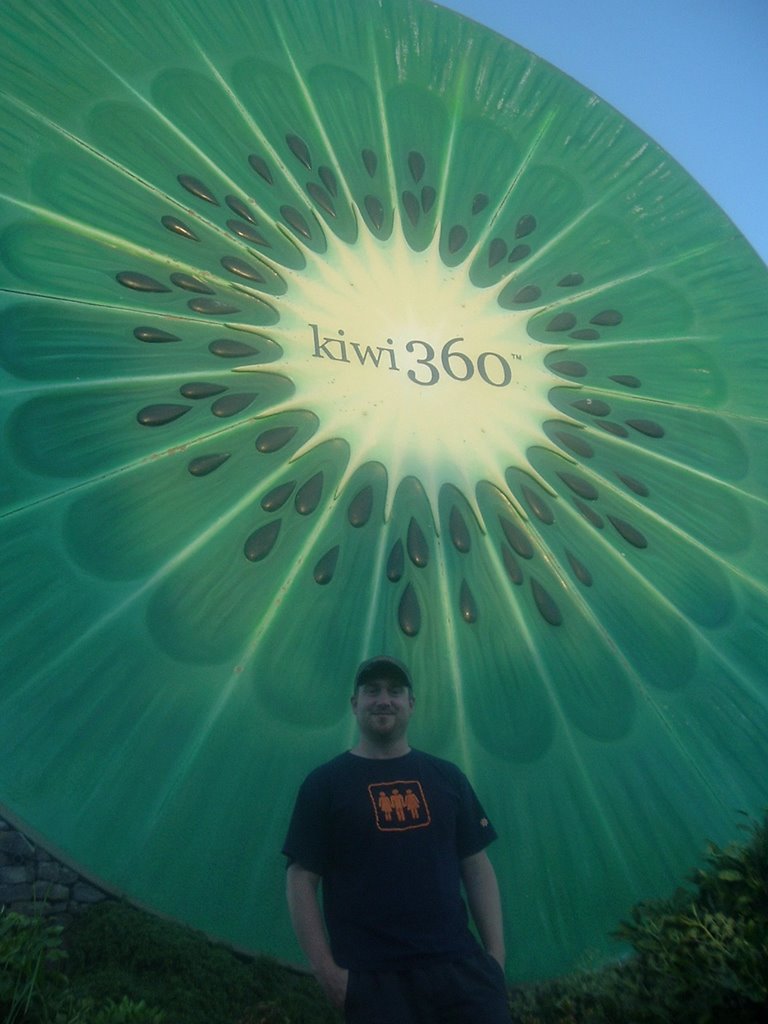
I'm a sucker for roadside tourist traps. This is, obviously, a big Kiwifruit. You can even walk up stairs inside and look out a small window (it's about four or five stories, and you look out on, well, nothing in particular).

Monday, May 15, 2006

when it's cold outside, I got the month of May

Wellington is once again living up to its reputation as a good city with bad weather. After a month of traveling around the North in generally good weather - warm and sunny more often than not - we have been getting a dose of winter here. Rain, wind and cold. Not the crisp cold of snow and ice, but the skin-chilling cold of air hovering just above the freezing point.
And for some reason, New Zealanders have decided they don't like easy methods of heating houses. Central heating is nearly unknown here. Even efforts to warm up with portable heaters are mostly useless - most people have radiant heaters without any fan to spread the air. This results mostly in warming the inch of so of air nearest the heater, and nothing else.

I asked a group of natives why they hate central heating, and got a vague answer involving macho posturing and suppressed masochism.
More fun was the response I got when I mentioned I hadn't seen a single dwelling with central heating, including our brand-new apartment building.
"There's central heating in Kelburn (a Wellington suburb)," one said.
"Parts of Thorndon," another added.
A few other areas of the city were mentioned, as were urban legend-type sightings: "My aunt's neighbor has central heating."
A comfortable indoor temperature, at least among the poor 20-something crowd in Wellington, inspires tales which sound like sailors swapping stories of mermaids a few hundred years back.
They didn't have central heating then, either, I suppose.

Thursday, May 11, 2006

Off the road

We were traveling in a car and could have been self-sufficient.
We had a mattress in the back, suitable for sleeping (after the cargo
had been redistributed to the front seats and the back seats folded
down). We had a camp stove and food. We had enough water. If we
wanted to expend some extra energy, we had a tent.
There was no real need to pay for a place to stay. And yet, we did.
Most of the nights we didn't stay with friends we paid for a camp
spot at a hostel or in a "Holiday Park" - private campgrounds with
facilities.
There were the showers, and hot water, a nice luxury when you're on
the road. There were the full kitchens.
But the real problem with just pulling over and staying in the car
was the end of daylight savings.
The weather was fine for our vacation. Sun most days, often warm
enough to make just hanging out on the beach a viable option. We were
in the presence of bikinis even on the last few days of our North
Island trip.
However, fall is definitely here and the sun has decided it doesn't
have to work a full shift any more. Even the nice days end around
5:30 p.m. That's a little early to just call it a night.
So we paid for the lights. Electricity, which meant a few hours
reading (or even some TV, at the larger grounds).
Yet another reason the summer is the ideal time for a road trip.

One of the most important things to know about New Zealand is this: you can't sue.
It's not quite as cut-and-dried as that, but it is true the country essentially outlawed personal injury lawsuits. Instead, the government pays all medical bills in the case of any accident.
This is important, especially for the tourists. Not because I care one way or the other about my ability to file a lawsuit. Because it means operators can offer crazy experiences without having to worry about crazy insurance premiums or lawsuits.
Case in point: over three days in Rotorua, I rolled down a large hill inside a plastic ball filled with water; drove a sprint car around a tiny concrete track, and rode down a white-water river with only a piece of hard plastic the size of a boogie board for protection and flotation.

Zorbing - rolling down the hill in a rubber ball - is a surreal experience. My ball was clouded milky white, so I couldn't see what was happening. I wasn't the only one in the ball, either - my friend Paul was also enclosed, as well as a few gallons of warm water. Once the ball started rolling, we just ended up sprawling on the floor, watching the sides zip around as the ball rolled down the hill.
Sledging - whitewater rafting without a raft - is a tiring experience. Actually going through the whitewater and rapids is the easiest bit. The tiring part is trying to kick against the current to get to the side of the river or steer along.
Driving the sprint car - a souped-up roll cage on tires - was also tiring, mostly due to the lack of power steering. It was also slightly disappointing, since my best lap time was 12.98 seconds, behind the 12.6 seconds Paul managed and well behind the 11.05 course record (it was on the upper end of the day's best runs though, and at least I cracked 13). More fun was having the power to drift around the corners, hearing the tires squeal. It might not lead to the best time, but it is more fun.

Since arriving in New Zealand I've swam with dolphins, jumped out of a plane, tubed down a stream inside a glow-worm cave, zorbed, sledged, driven a sprint car, kayaked in a fiord during a downpour, kayaked in the Bay of Islands during a perfect day of sunshine, skied on a volcano, sledded down sand dunes.
Next up on the list: a bungy jump.

Pukeko


stepping out
Originally uploaded by anek dotal.
Birds are the main attraction here - the only attraction, really, when it comes to wildlife. Starting with the Kiwi, New Zealand has a plethora of birds you're not going to find anywhere else and the country is understandably proud of them.
Of of the more common, but odd-looking, birds is the Pukeko, or swamp hen.
The Pukeko is easily recognizable by it's bright purple or blue breast and unique body proportions. The body is about the size of a chicken, but the legs are stretched so that it appears to be walking on stilts, and its feet seem to belong to a much larger bird.
You can often catch glimpses of Pukeko on the side of rural roads, although they are generally shy birds. Apparently they are considered a game bird and can be hunted, but I haven't seen Pukeko on any menu since I've been here. I'll keep looking.

(The plural form of Pukeko, by the way, is "Pukeko." No 's' at the end.)


We saw these Pukeko in a park in Wanganui. They were trying to eat something in the water, and were looking for a good perch.
They walked along the lilypads, which managed to hold them above the water. As soon as the birds stopped, however, they slowly started to sink. A few seconds later, the Pukeko would hop back up to the lilypads and take a few more steps before stopping, slowly sinking, and repeating the process.
While I was watching, the Pukekos never found much of what they were looking for. They were too busy being constantly surprised by their lack of buoyancy.

Tuesday, May 09, 2006

a few random thoughts

- It's good to have friends who have houses and spare bedrooms.
About half the nights we spent on the road this past month, we spent staying with people we'd met. Most of the time, these were people we met in Wellington. A few friends had moved to other locales. One of our Wellington friends has relatives who own a house in Russell. He flew up to meet us, and we stayed in campers on the beach, behind his great-aunt's house.
This relationship helped us out twice. When we got to Russell and met the great-aunt, she offered us use of her house in Auckland, which was sitting empty. It was in a terrific location, and we had free accommodation to check out the city.

- Talking with people you don't know who have spare beds can also turn out well. Our most random night came just before Easter. We'd spent the day around Mount Taranaki, and were driving past a small brewery at the end of the day. We stopped, sampled some beer, bought some beer, and started talking with the owner. He ended up offering us a spot for the night in a small cabin on the grounds. A night in the tent avoided.

- Having a car large enough to fit a mattress is invaluable if your alternative is a tent and you stop in a downpour of rain.

- People in New Zealand seem to expect tourists to pull over where they can and sleep in their car (or van or whatever). People in New Zealand have a high tolerance for cheap tourists.

- However, cooking on a camp stove in the middle of the day in a city park still earns you some odd looks.

- Every now and again you need a day when you're not trying to see anything in particular or do anything more than just hang out.

- The first week we were in New Zealand, we took a bus trip from Auckland to the Bay of Islands. At the time, we were amazed by the narrow, winding road.
Seven months later, we drove from Auckland to the Bay of Islands. This time, we were amazed by how wide and relatively straight the road is.

- To give you an idea of New Zealand roads, State Highway 1, the main North-South artery of the country, is unpaved for about 20 miles at its North end.

- I still haven't figured out how, when we're traveling, we meet lots of similar tourists out in the cities. When we were living in Wellington, we ran into almost no tourists out at night.

- Seeing beaches never gets old.

no shirt, no shoes, no problem

The unseen authorities in New Zealand always have a far more relaxed attitude than in the States. Not to mention the people.
Shoes, for example. They are always optional. Not just in the normal places - on the beach, or in the house, or even on the sidewalk. They are very optional there. But even in, say, the supermarket. Shoes are optional. And a fairly significant number of people opt to walk around sans shoes.
I saw this a number of times before it even occurred to me something was different. I mentioned this to a Kiwi friend the other day, and he told me his story:
A few years ago he was working in the US and his shoes fell apart. He drove, barefoot, an hour or two to the nearest town (he was working, I think, for a summer camp) to buy a new pair of shoes. The sporting goods store, however, wouldn't let him in because he didn't have any shoes.
This was a possibility he hadn't considered: needing to possess shoes before purchasing shoes.

what are they trying to say?


warning
Originally uploaded by C Buckley.
This is my favorite road sign in New Zealand. That's all - usually there's no text on the sign. Just the exclamation point. It never fails to amuse me.

end of the tour, for now

No photos yet, but we have finished (for now) our great New Zealand road trip.
We covered just about the entirety of the North Island, going from Wellington up the west coast to Taranaki, then east to Rotorua, north to Whakatane, then further north, past Auckland to the Bay of Islands. A weekend there, and we headed further north, driving until we simply ran out of North ahead of us. Then we turned south, down the 90-mile beach, down to Auckland, east to the Coromandel and back to Whakatane, before making one long last day's push back to Wellington.
We saw lots of beaches, a few mountains, cities and small towns, rolling hills and enormous sand dunes. At times we dived whole-heartedly into the tourist attractions, but most of the time we were living out of our tent and car or staying with friends we've made residing in New Zealand.
Now it's time for a brief break back in Wellington, catching up with friends and catching our breath, before piling back in the car and heading for the South Island. We have no idea what happens after we get off the ferry in the South Island. Hopefully we can find some work and a place to live. And do some skiing.

Thursday, May 04, 2006

running away from summer

After a month on the road nearly always bathed in sunshine, we're headed back to Wellington today and it's raining. Probably a good way to get acclimated back into Wellington's weather (and the South Island).
We're finished with our North Island travels, after going as far north as we can, and seeing nearly all the the corners of the island. Pics and travel stories will follow over the next week or so, hopefully.

Tuesday, April 25, 2006

quick and dirty

This update will be of the variety spelled out in the title, since the Internet at tonight's hostel is slow and expensive.
We've been slowly working our way north along the top of NZ, and tomorrow are scheduled to get up to the very top - Cape Reinga, via a bus tour along the 90-mile beach. The beach is an unbroken expanse of hard sand along the west coast of the top of the country that is used as a highway for the adventurous.
We've had free places to stay along the way - a friend's beach-front house in Russell, in the Bay of Islands, was last weekend's accomodation. A week ago we got even luckier - stopping at a small local brewery by Taranaki we struck up a conversation with the brewery owner, who ended up letting us stay in a small cabin he had. Our most random social interaction so far - I'm hoping we end up beating it.

(and on another note, I've just passed 100 posts on this blog. Which seems like I've been seriously slacking. So, sorry.)

Thursday, April 20, 2006

sunset in Whakatane

Our time in Whakatane - which also means our time with Internet - is about to end. We're headed for Russell, in the Bay of Islands, for the weekend. Meeting up with yet another Wellington friend who has a family house there (it's a lot easier to travel when you know people with houses).
We'll head up as far north as we can go, then start heading South again.

playing games

The mountains on New Zealand's North Island are shy. At least when I come calling.
The first few days I come to see them, they hide. They cover themselves in a veil of white, allowing only a demure peek at their uncovered lower extremities. A day or two later, they may lift the cover a bit to peek out without ever showing their peak, even though they know that's what I'm there to see.
Tongariro, Ngauruhoe, Ruapehu, Taranaki - all the same.
I made three different visits to Tongariro National Park, where the first three mountains I mentioned are located, before ever seeing the top of the mountains. One of those days I was skiing on Ruapehu, and could barely see the surface I was skiing on through the fog.
This past week we were in the Taranaki region, so named for the dominating presence of Mt. Taranaki. It was beautiful country, and the beaches had sun and blue sky. But when we looked behind us toward the mountain, all we saw was cloud.
Until the day we were leaving, when we woke up to see Taranaki unveiled, standing before us.